

Your app idea probably isn't the problem. The problem is choosing a partner in New York who can turn it into a product that scales, survives roadmap changes, and doesn't need to be rebuilt the moment AI becomes central to your user experience.
That's why picking a mobile application development company in New York now goes beyond design taste or coding speed. The stronger firms are building AI-ready systems from the start, often pairing app delivery with operational tooling such as prompt management systems that help teams control versioning, logging, integrations, and model spend. If your roadmap includes personalization, copilots, search, recommendations, or internal workflow automation, that matters a lot more than a polished pitch deck.
New York is also one of the toughest places to hire and buy development services. Average mobile app development rates in the city range from $90 to $160 per hour, and average base salaries sit around $147,200 for iOS developers and $131,375 for Android developers, according to Business of Apps on NYC app developer costs. In other words, mistakes get expensive fast.
If you're still shaping the product itself, this walkthrough of UX design process steps is a useful companion. For the partner search, start here.
1. Wonderment Apps
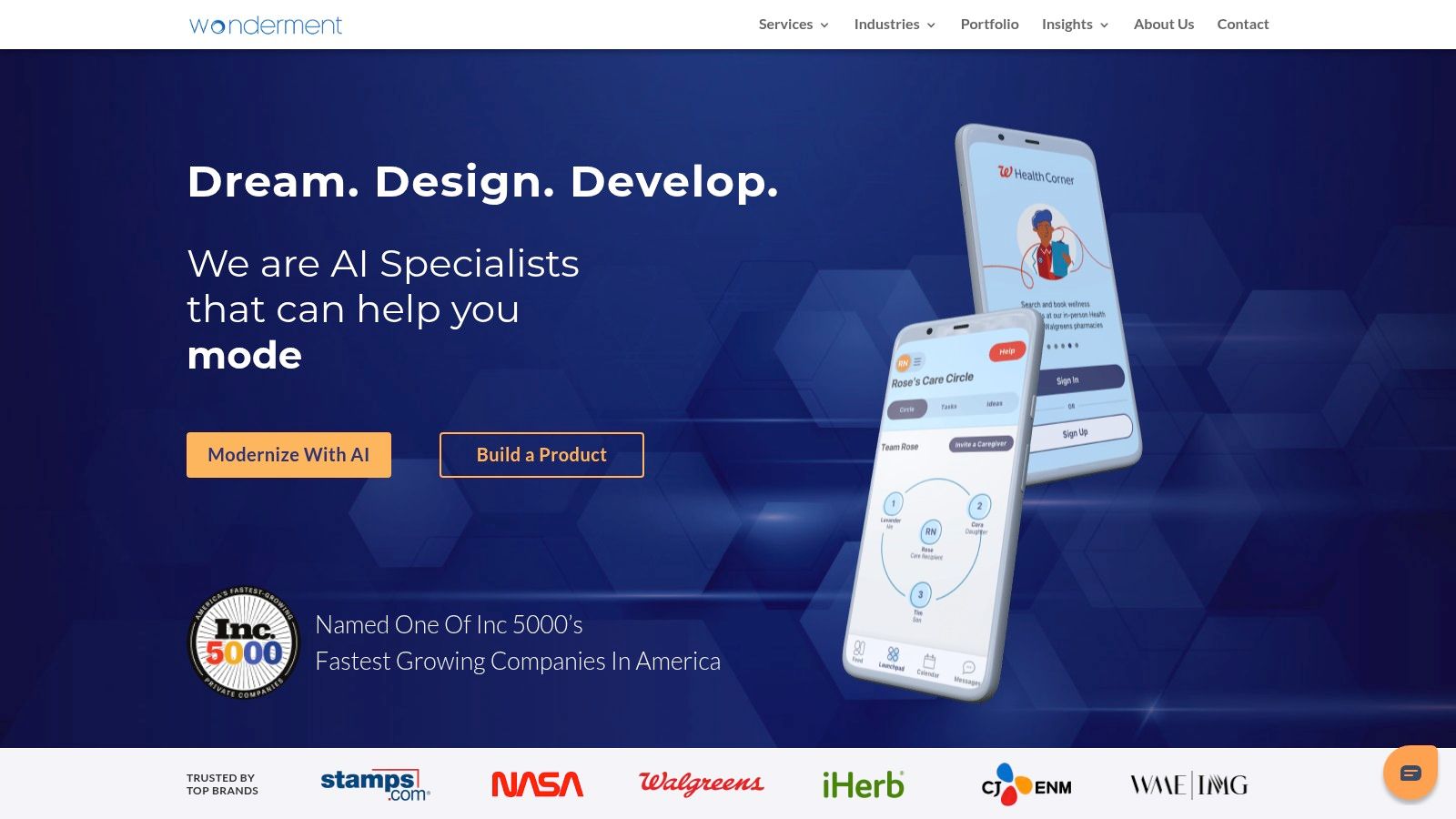
Wonderment Apps stands out when the brief is bigger than “build us an app.” They're strongest when a business needs to modernize an existing product, connect AI capabilities to real workflows, and keep the whole system governable after launch.
That last part is where many agencies get fuzzy. Wonderment's pitch is operational, not just conceptual. They pair product design and engineering with an administrative prompt management system that includes a prompt vault with versioning, a parameter manager for internal database access, unified logging across integrated AI systems, and cost visibility for cumulative AI spend. For a team trying to ship AI features without losing control of prompts, outputs, and vendor costs, that's a practical advantage.
Why they fit AI modernization work
Wonderment approaches modernization like a systems partner. They audit data architecture, connect best-fit AI models, and keep updating implementations as models change. That's a better fit for companies with legacy platforms, fragmented data, or high stakes around reliability than agencies that bolt a chatbot onto a mobile front end.
They also run a Managed Projects model that assembles right-sized teams of engineers, designers, QA, and project managers to deliver and scale applications. Their positioning is explicitly about high-performance products that can support millions of users, with use cases like personalization, recommendations, predictive fraud or churn detection, anomaly detection, and autoscaling.
Practical rule: If an agency talks confidently about AI but can't explain prompt governance, logging, and model cost control, you're hearing strategy theater, not delivery readiness.
Trade-offs that matter
Wonderment is a strong match for ecommerce, fintech, healthcare, media, SaaS, nonprofit, and government teams that need both execution and long-term operational support. They also offer curated staffing across React, .NET, Java, iOS, Android, WordPress, QA, product, and UX roles, which helps when an internal team needs reinforcement instead of full outsourcing.
The trade-off is simple. Pricing isn't public, and the work is custom quoted. That usually means more up-front scoping, which can feel slower if you only need a lightweight MVP. It also means they're probably more partner than vendor.
A credibility signal that's worth noting: Wonderment highlights Inc. 5000 recognition and client feedback, including Richard Frias, VP of Digital, who said, “Their ability to be nimble while, at the same time, thorough in their approach was impressive.”
2. BlueLabel
BlueLabel is the kind of firm that appeals to leaders who want a structured product process, not just a development shop. Their reputation rests on strategy, design, mobile execution, and iterative release planning that keeps the app improving after launch.
That makes them useful for companies that know the business problem but still need help refining the product shape. BlueLabel tends to frame work around research-led sprints and staged releases, which is often healthier than trying to spec every feature up front.
Where BlueLabel is strongest
They're a good option when you want product strategy, iOS and Android engineering, QA, and growth support in one place. Their process orientation tends to reduce chaos, especially for leadership teams that need milestones they can socialize internally.
If you're comparing build partners and want a baseline on delivery models, Wonderment's overview of mobile app development services is a useful reference point.
BlueLabel also mentions generative AI consulting alongside its mobile practice, which matters if your roadmap includes AI-assisted workflows or user-facing intelligence but you still want a conventional product agency structure around delivery.
- Best fit: Businesses that want strategy, design, development, and post-launch support from one partner.
- Watch for: Smaller teams may find the process heavier than they need for a narrow-scope MVP.
- Good question to ask: Who owns prioritization after the first release, your team or theirs?
The trade-off is that mature process usually brings more ceremony. That's helpful on larger programs and sometimes annoying on smaller ones.
3. Fueled
Fueled has long been associated with polished digital products, especially iOS-heavy experiences where design quality carries real business weight. If your product lives or dies on brand feel, content presentation, or a premium user experience, they deserve a close look.
They're not just a mobile boutique, though. Fueled also works across AI, web platforms, enterprise CMS projects, and growth efforts. That mix makes them appealing for content-rich and commerce-heavy products where the app is only one piece of the ecosystem.
What they do well
Fueled tends to shine when product quality is visible to end users and leadership wants a strong creative point of view. Their partnerships across platforms such as WordPress VIP, Flutter, AWS, and Vercel suggest a team that's comfortable working across modern delivery stacks instead of treating mobile in isolation.
If your internal team is still settling core engineering decisions, these best practices for mobile app development help frame the right technical questions before agency conversations get too far.
Design-led agencies can produce excellent products. They can also stretch discovery if no one on your side is willing to make sharp prioritization calls.
The trade-off with Fueled is that the same creative rigor that makes the work shine can add pre-build time. Teams looking for a fast engineering-only partner may find the process richer than necessary. Teams with public-facing products often see that as a feature, not a bug.
4. Work & Co
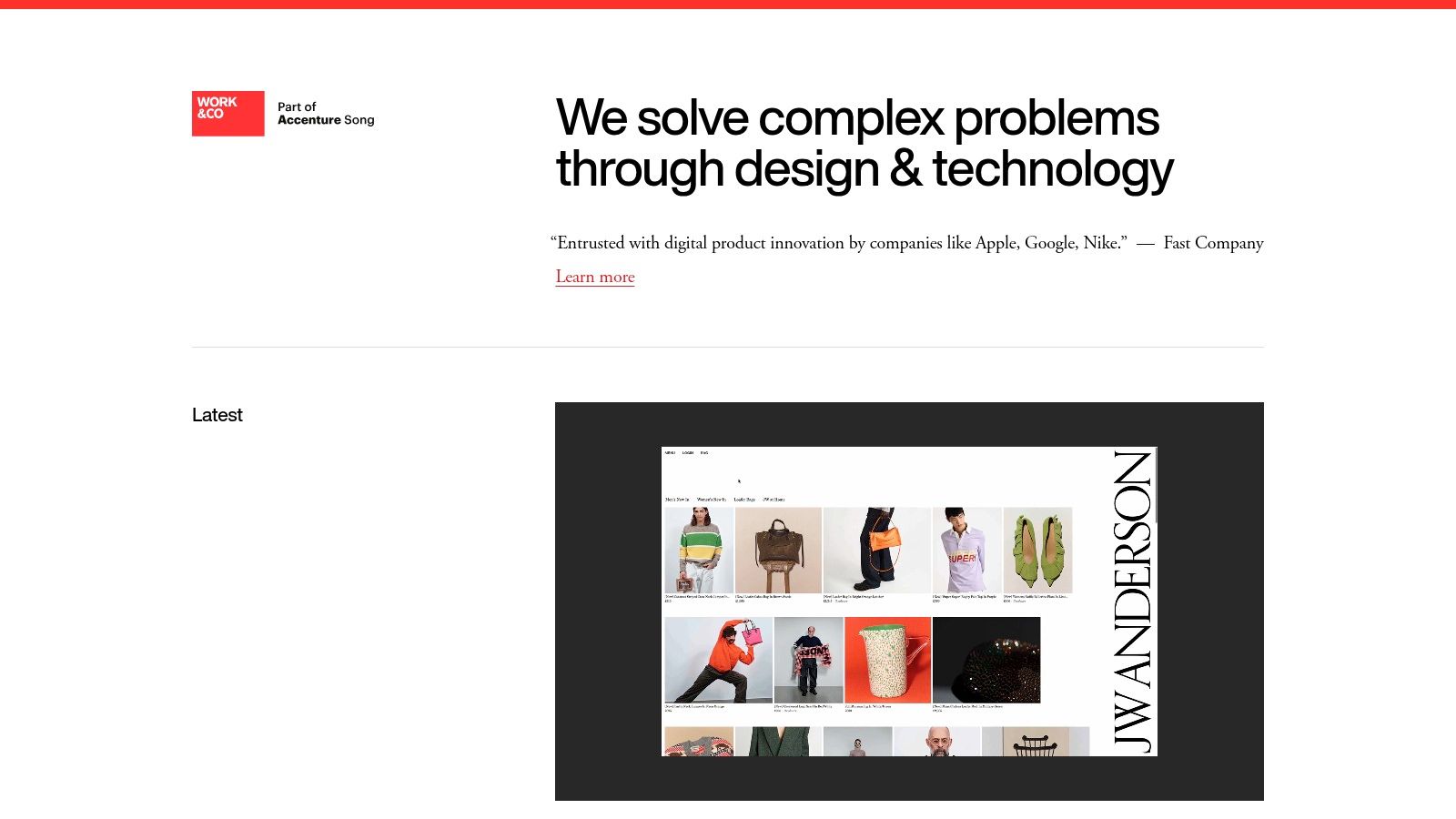
Work & Co is built for serious digital programs. If your app sits inside a larger commerce, service, or enterprise product ecosystem with many stakeholders, this is one of the more credible names in New York.
Their Brooklyn roots matter less than their operating model. They use integrated product, design, and engineering squads to ship core digital products for major brands including Apple, Google, Nike, Pfizer, and ALDO. That signals comfort with governance, complexity, and scale.
When Work & Co makes sense
Work & Co fits organizations that need alignment across leadership, brand, engineering, and operations. They're not the shop you hire because you need a simple app quickly. They're the shop you hire when the app is strategic and failure would be expensive politically as well as financially.
Their approach also suits AI-enabled experiences where the challenge isn't just adding a feature, but integrating that feature into a larger product system with consistency and performance standards.
- Strong fit: Enterprise programs with many internal stakeholders.
- Less ideal: Founders who want a fast MVP with minimal process.
- Key buying lens: Can your organization support the level of collaboration this model expects?
Work & Co usually makes the most sense when leadership already agrees that the product is mission-critical.
5. Utility
Utility is one of the more balanced options on this list. They cover product strategy, UX/UI, native and cross-platform development, AI solutions, backend infrastructure, and growth support. That breadth makes them useful when a company needs one partner that can move from concept through iteration without constant handoffs.
I'd put Utility in the “pragmatic full-service” category. They aren't positioned as purely design-first or purely engineering-first. That usually works well for companies balancing product ambition with business constraints.
Why buyers consider them
They've worked across healthcare, media, sports, and fintech, which suggests comfort with different stakeholder types and product behaviors. Their positioning also emphasizes long-term product evolution rather than one-and-done launches, which is the healthier mindset for nearly every mobile product.
New York's developer market is also dense and competitive. Clutch's rankings for New York City app developers show how many specialized firms operate in this market, from established agencies such as Simpalm and Blue Label Labs to globally recognized names like ArcTouch and TechGropse. Utility benefits from being evaluated in that crowded field.
Buyers often overvalue portfolio style and undervalue roadmap discipline. Ask how the agency handles version-two decisions before you fall in love with the homepage.
The trade-off here is breadth. When a firm offers many services, you need sharper scoping on your side so the must-have features don't get buried under possibilities.
6. ArcTouch
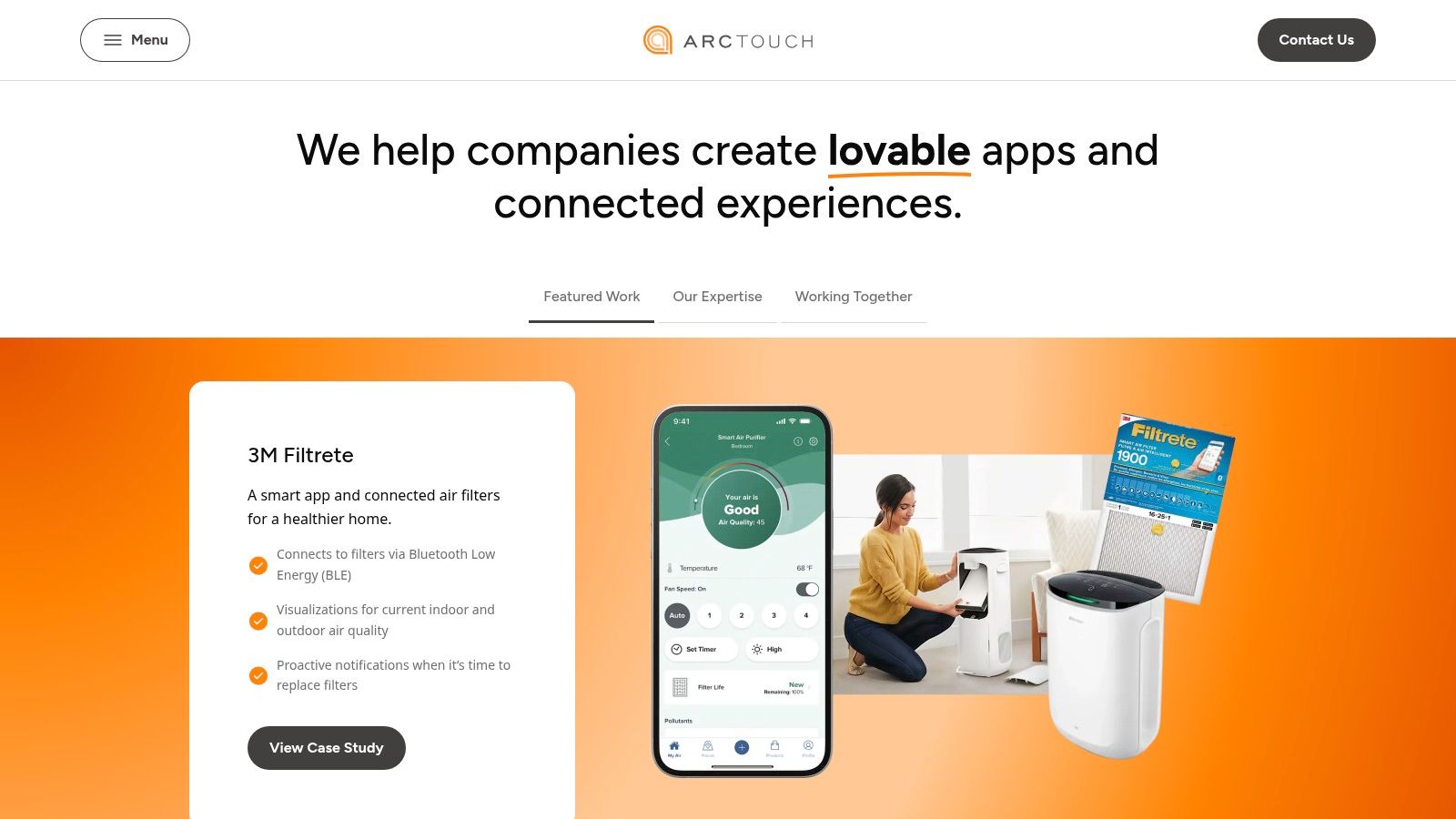
ArcTouch is a strong choice for teams that care about engineering method as much as user experience. They've been around long enough to have a mature delivery approach, and their New York presence helps when regional collaboration matters.
Their work spans native iOS and Android, connected digital experiences, platform engineering, QA, DevOps, and post-launch support. They also speak comfortably about composable architectures and AI-infused practices, which is useful when your mobile app is really a front door to a broader product stack.
Engineering depth and cost reality
ArcTouch looks most compelling for companies with complex integrations, enterprise mobile requirements, or high-traffic consumer experiences that can't afford brittle architecture. They're less about flashy claims and more about disciplined execution.
If budget conversations are getting tense, this guide to the cost of software development is a helpful way to anchor the discussion around scope and delivery model instead of headline rates.
A broader market signal is worth mentioning once here. Research on NYC mobile development notes that top firms widely support React Native, Flutter, and native iOS and Android frameworks, and highlights average ratings such as 4.6/5 for firms like Worry Free Labs and Clearbridge Mobile that emphasize end-to-end delivery and domain specialization, according to Purrweb's review of mobile app development in New York. ArcTouch fits well inside that mature ecosystem.
The trade-off is that firms with this level of engineering depth often align best with substantial projects, not tiny builds.
7. Appetizer Mobile
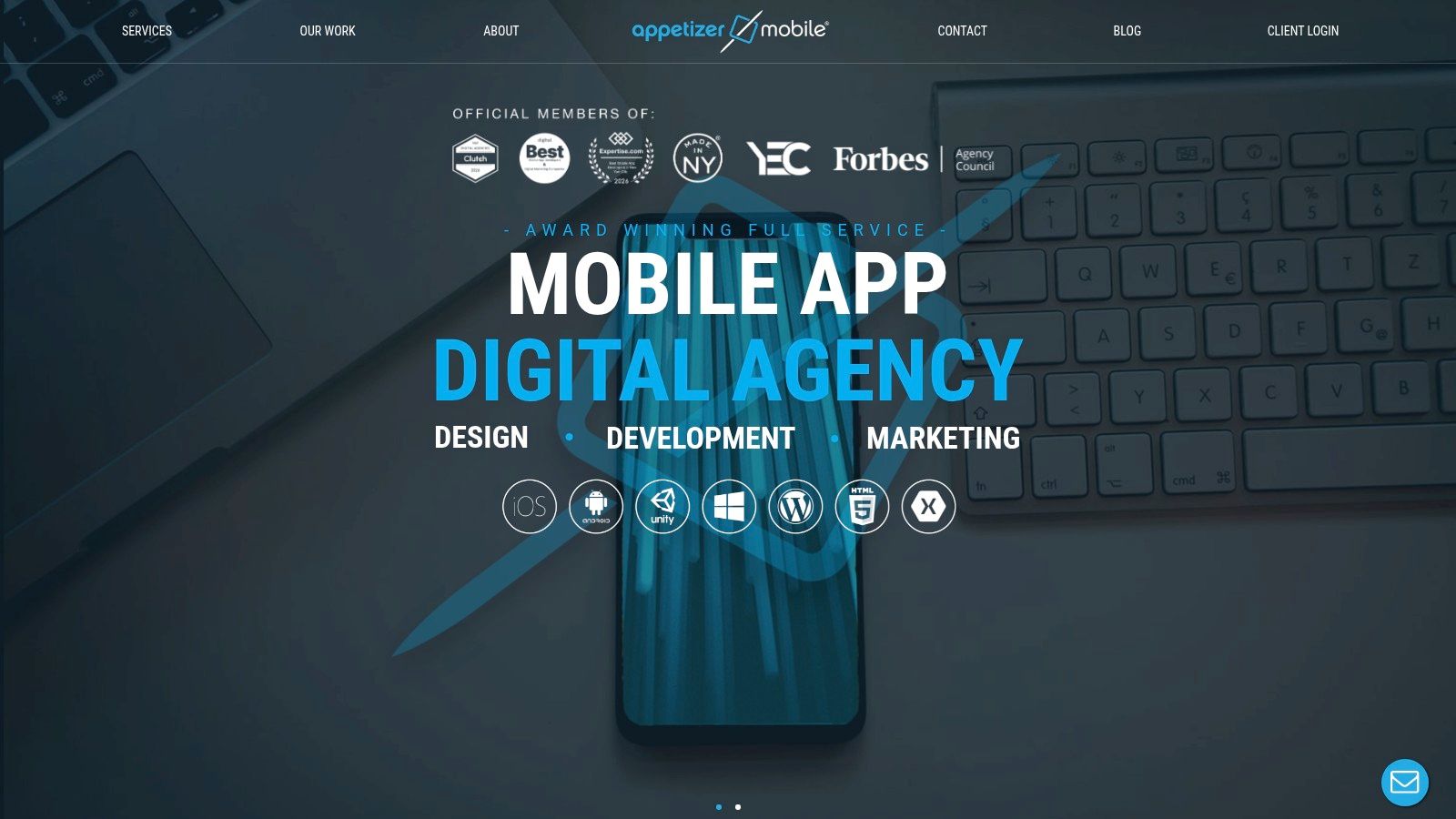
Appetizer Mobile is the most campaign-friendly option in this lineup. They're Manhattan-based and blend strategy, UX/UI, native app development, XR work, and launch marketing. That combination can be powerful for media, entertainment, retail, and branded consumer initiatives.
Not every product needs enterprise ceremony. Some teams need speed, visual punch, and launch support tied closely to audience acquisition. Appetizer Mobile can fit that brief better than a heavier product consultancy.
Best for audience-facing launches
If you're building a promotional app, a celebrity or creator-led experience, an immersive retail feature, or an AR/VR activation, their service mix is attractive. The inclusion of launch marketing changes the conversation because it connects build decisions to adoption planning earlier than many engineering-led shops do.
The caution is around enterprise rigor. For fintech, healthcare, government, or regulated data environments, you should verify security and compliance practices carefully rather than assuming them. One gap in this market is detailed compliance guidance for regulated mobile apps. Appinventiv's New York page argues that many buyers still can't see how agencies architect for standards such as HIPAA, Section 508, or NYC Local Law 34 in practice, and cites a 2025 Gartner figure that 42% of New York healthcare digital projects fail initial compliance audits due to inadequate mobile data encryption or audit trail logging, via Appinventiv's New York mobile development page.
That doesn't indict Appetizer Mobile specifically. It does mean regulated buyers should ask much tougher questions than “Have you worked in healthcare?”
Top 7 New York Mobile App Development Companies Comparison
| Vendor | Implementation complexity | Resource requirements | Expected outcomes | Ideal use cases | Key advantages |
|---|---|---|---|---|---|
| Wonderment Apps | High, legacy modernization & AI integration | Cross-functional teams (data engineers, ML, frontend, QA, PM); scalable staffing | Data-first apps, personalization, predictive insights, autoscaling, measurable KPIs | Enterprise modernization, AI-led transformation, high-scale consumer/finance/health apps | Deep AI modernization toolkit, end-to-end delivery, curated staffing, measurable outcomes |
| BlueLabel | Medium, research-led sprints and iterative releases | 100+ multidisciplinary team; structured design sprint and mobile engineering | Consumer-grade mobile apps with steady post-launch growth | Mobile-first consumer products, research-driven MVPs, iterative product growth | Repeatable, research-led methodology; clear milestones; generative AI consulting |
| Fueled | Medium–High, design-forward, polish-focused builds | Design-led teams, CMS/commerce partners, platform engineering | High-polish iOS/cross-platform apps and hardened platforms for brands | Content-rich, commerce or media projects needing premium UX | High-design quality, CMS/commerce depth, scale experience for major brands |
| Work & Co | High, enterprise-scale product delivery | Integrated product/design/engineering squads; senior talent and governance | Mission-critical, enterprise-grade products with performance and brand fidelity | Large-brand initiatives, complex ecosystems, strategic digital programs | Proven enterprise delivery, design excellence, global delivery capability |
| Utility | Medium, practical product evolution and experimentation | End-to-end product, UX, engineering, AI, DevOps and growth teams | Improved acquisition/retention through experimentation; long-term product evolution | Greenfield products and modernization with measurable growth goals | Balanced capabilities for build+growth; practical focus on measurable outcomes |
| ArcTouch | High, complex integrations and platform engineering | Strong engineering, platform/DevOps, cross-platform and MACH expertise | Scalable native apps and connected experiences with robust integrations | Enterprise mobile, composable architectures, apps requiring complex integrations | Engineering depth for large-scale integrations; long track record with Fortune apps |
| Appetizer Mobile | Low–Medium, campaign and feature-focused builds (XR optional) | Fast, flexible teams with UX, dev, XR and marketing capabilities | Rapid campaign apps, AR/VR activations, branded/celebrity experiences | Media, entertainment, retail campaigns, promotional app launches | Speed and flexibility, XR/AR capability, integrated launch marketing |
How to Make Your Final Choice (and Future-Proof It with AI)
The right mobile application development company in New York won't just promise a polished app. They'll show you how the product will evolve, how AI will be governed, and how the underlying system will stay stable when usage grows.
Three filters usually separate a strong partner from a good sales team. First, industry fit. A beautiful consumer app process doesn't automatically translate to fintech workflows or healthcare constraints. Second, delivery transparency. You want to know who's doing the work, how decisions get made, and what happens after launch. Third, AI readiness. That means more than “we can add AI features.” It means they can explain model selection, integrations, logging, on-device versus cloud inference, and how your team keeps control of prompts and costs.
That last point is where many evaluations should get more practical. AI in mobile apps often works best when developers connect to external models through APIs or plugins for conversational AI, personalization, or image recognition. For mobile-specific performance, smaller models such as TensorFlow Lite or Core ML are better suited for on-device use, while larger models can run through cloud inference with REST or gRPC APIs, as outlined in Kanhasoft's overview of AI and ML technologies for custom apps. Ask every agency which pattern they'd use for your product and why.
Wonderment's prompt management system is a good example of what mature AI operations should look like. The prompt vault with versioning gives teams control over changing instructions. The parameter manager helps structure secure internal database access. The unified logging system makes troubleshooting and governance easier across AI integrations. The cost manager gives entrepreneurs and product leaders a direct view of cumulative AI spend, which is critical once multiple models, prompts, and environments are in play.
If your roadmap includes AI, don't treat that tooling as a nice extra. Treat it as infrastructure. A smart app is useful. A governable smart app lasts.
Ready to see what that looks like in practice? Schedule a demo of Wonderment's prompt management system and evaluate your next app partner with a much sharper lens.
If you're planning a new product, upgrading an existing platform, or adding AI to a live application, Wonderment Apps is worth a serious look. They combine mobile and web delivery with AI modernization, managed project teams, curated staffing, and an operational toolkit that helps teams control prompts, integrations, logging, and model spend from day one.