

Every truly great digital product, whether it's a bustling ecommerce site or a rock-solid fintech app, starts with a clear roadmap. Each web development stage is a deliberate step in a carefully structured process that turns a great idea into a functional, scalable, and genuinely user-friendly reality. This guide is here to pull back the curtain on that entire journey, breaking down the seven core phases for business leaders.
Your Blueprint For Digital Success
Building a web application is a lot like constructing a skyscraper. You’d never start pouring concrete without architectural blueprints, a detailed project plan, and a crystal-clear understanding of the building's purpose. It’s the same with web development. Skipping a stage is just asking for costly rework, blown deadlines, and a final product that leaves users frustrated. A structured approach ensures every decision is intentional and laser-focused on your business goals.
We’ll walk you through seven distinct phases: Discovery, Planning, Design, Development, Quality Assurance, Deployment, and Maintenance. We'll also touch on how bringing AI into the mix can elevate your project's outcome—a key part of any modern digital transformation strategy. For instance, a well-managed AI integration absolutely requires specialized tools to succeed. A key part of modernizing any application is having the right administrative toolkit to manage AI integrations, from prompts and versioning to logging and cost control—a challenge we've solved with our own proprietary system at Wonderment Apps.
To help you visualize the basic workflow, here’s a simple breakdown of the process from start to finish.
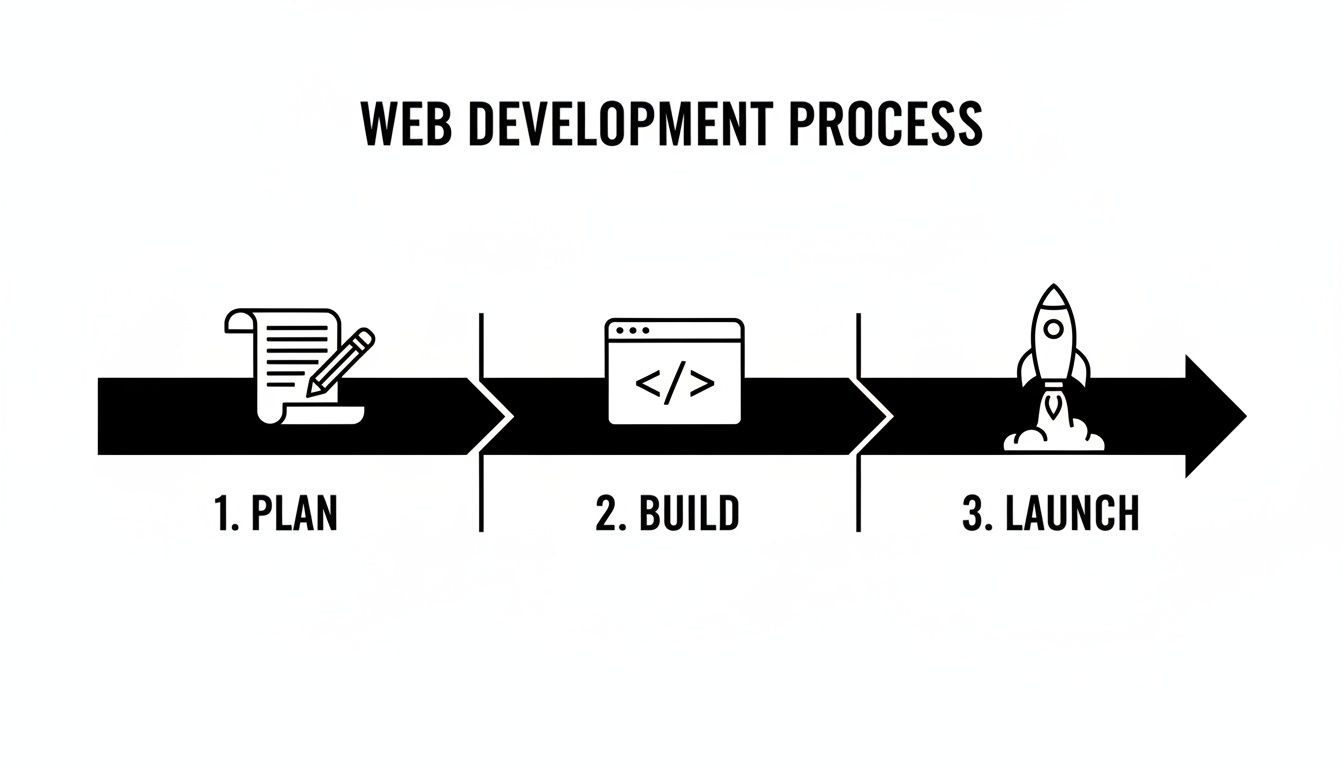
This just goes to show that every successful project follows a logical path, kicking off with a solid plan long before any building or launching happens.
Modernizing Your Approach with AI
At Wonderment Apps, we’ve seen firsthand how AI can take a project from good to great. But here's the thing: effective AI integration is more than just plugging in a model and hoping for the best. It demands a powerful administrative toolkit to manage everything from prompts and versioning to logging and cost control. That’s why we built our own proprietary system designed to plug into your existing software, future-proofing your investment and putting you in complete control.
A common sentiment among the terminally-online community is that if you’re not writing actual lines of code, then you’re not a real developer; often the industry treats the process of development as the outcome, rather than the actual website or app produced.
This perspective really gets to the heart of a key shift: the goal is the final product's success, not just the busywork of the process itself. By mastering each web development stage, you keep your eyes on the prize.
To really dig into what it takes to get from a rough idea to a polished launch, this comprehensive guide on how to build a mobile app from idea to launch is a great resource. It will give you the knowledge to navigate your project with confidence, ensuring your final product is scalable, user-centric, and built to last.
Laying The Foundation With Discovery And Planning
Before a single line of code gets written, the most important work has already begun. Think of the Discovery and Planning stages as drawing up the architectural blueprints for a skyscraper. Jumping straight into development without them is like trying to build a house on sand—a surefire recipe for disaster. This initial phase is all about asking the right questions to make sure what you build is what your business and, more importantly, your users actually need.
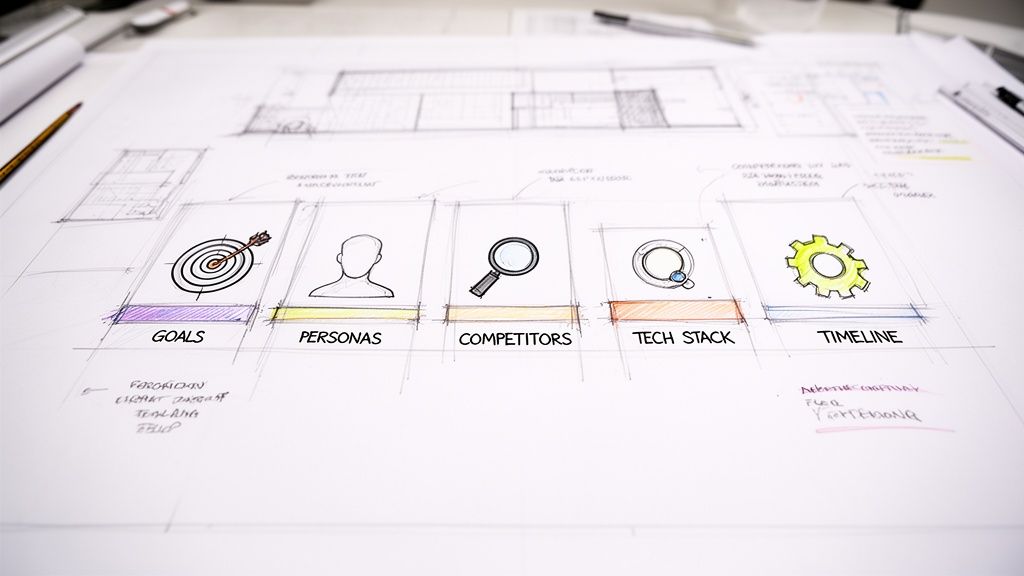
The Discovery phase is where we lock down your "why." This involves deep, candid conversations with all the key stakeholders to get crystal clear on business objectives, define the key performance indicators (KPIs) that will measure success, and nail down the core problem your web app is meant to solve. This is also where we get into the weeds of your target audience, creating detailed personas for a healthcare app's patients or segmenting customer profiles for a new ecommerce platform. A thorough competitor analysis rounds out the picture, showing us where the market gaps and real opportunities are.
Turning Ideas Into Actionable Plans
Once the "why" is rock solid, the Planning stage translates that vision into a tangible strategy. Here, abstract goals become concrete project specifications and technical requirements. A huge part of this is crafting a detailed project plan that maps out every single feature, function, and user flow. Our guide on how to create a product roadmap is a great resource for structuring this critical document.
Choosing the right technology is another cornerstone of this phase. Do you need the enterprise-level security of .NET for a fintech application, or will React's dynamic UIs deliver a better experience for a media streaming service? We also use this time to define the project scope with absolute clarity. This is crucial for preventing "scope creep"—that slow trickle of unplanned features that can blow up budgets and timelines.
This initial web development stage sets the tone for the entire project. A thorough Discovery and Planning process reduces ambiguity, aligns the team, and significantly minimizes risks down the line. It's the difference between building with purpose and building on a prayer.
A quick look at the history of web development shows just how vital this planning has become. Back in the early 1990s, Tim Berners-Lee launched the first-ever website with the simple HTML he created. By 1993, browsers like Mosaic kicked off explosive growth, but most sites were little more than static brochures. Today's projects—like the complex SaaS platforms Wonderment builds—require meticulous upfront strategy to transform those old, rigid concepts into the scalable, AI-powered applications that drive modern industries from healthcare to finance. For more on this evolution, check out the history of web development at GeeksforGeeks.
Key Deliverables in Discovery and Planning
To keep your project firmly on the rails, it's essential to produce clear, documented outputs from these foundational stages. These documents become the project's single source of truth, guiding every decision that follows.
Here's a breakdown of the essential deliverables for these first two phases, which ensure everyone is aligned and the project starts on solid ground.
| Stage | Key Deliverable | Purpose |
|---|---|---|
| Discovery | Business Requirements Document (BRD) | Outlines high-level business goals, target audience, and success metrics. |
| Discovery | Competitor Analysis Report | Identifies strengths, weaknesses, and opportunities within the market landscape. |
| Planning | Functional Specification Document (FSD) | Details all features, user interactions, and technical requirements of the application. |
| Planning | Technology Stack Recommendation | Justifies the choice of languages, frameworks, and databases for the project. |
| Planning | Project Roadmap & Timeline | Provides a visual overview of milestones, sprints, and delivery deadlines. |
| Planning | Wireframes & Sitemaps | Establishes the basic structure, layout, and navigational flow of the application. |
By dedicating the right amount of time and resources to Discovery and Planning, you're not just going through the motions. You're building a solid framework that supports the entire project, ensuring the final product works flawlessly and, most importantly, delivers real business value.
Bringing Your Vision To Life Through Design And Development
Okay, the blueprint is solid. Now we get to the fun part—the stages where your vision starts looking and feeling like a real product. The Design and Development phases are where we move from strategy and planning to something tangible that users can see, touch, and interact with.
This is where abstract ideas are carefully molded into a working application. It’s a massive step forward in the web development journey.
This transition isn't just about aesthetics; it’s about solving real user problems in an elegant and efficient way. A smart design makes an application intuitive, not just beautiful. Then, the development phase brings that design to life with clean, scalable code that’s built to last.
Crafting The User Experience And Interface
The Design stage is really a tale of two disciplines working in perfect harmony: User Experience (UX) and User Interface (UI). Think of UX as the invisible architecture of the user's journey. It’s the logic that guides a user from point A to point B, whether that's a painless checkout on an ecommerce app or a compliant data-entry form for a healthcare platform.
UI, on the other hand, is the visible layer. It’s the color scheme, the typography, the style of the buttons, and the animations that give the product its personality. A great UI makes the logical flow of the UX feel effortless and even enjoyable.
To bridge the gap between a concept and the code, our designers create a few key deliverables.
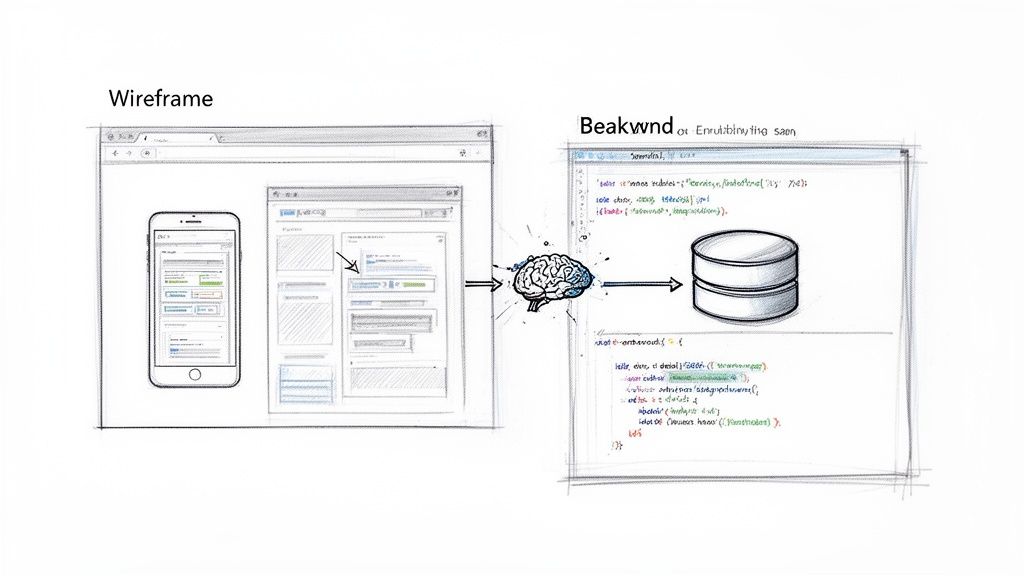
- Wireframes: These are the bare-bones layouts, like the structural skeleton of the application. They are low-fidelity, black-and-white mockups that focus purely on layout and function, stripping away any visual noise.
- Mockups: Now we add the skin. Mockups are high-fidelity, static designs that show off the UI in full color, complete with typography and imagery. They’re a snapshot of what the final product will actually look like.
- Prototypes: This is where things get interactive. Prototypes are clickable mockups that let stakeholders walk through the application, simulating the real user journey. This is crucial for gathering feedback before a single line of code is written.
Building The Engine And The Chassis
Once everyone signs off on the design, the Development stage kicks into high gear. This is where our engineers take those static designs and breathe life into them, splitting the work between the frontend and the backend.
People often think of development as just "building," but it's really more of a translation process. Engineers translate a human-centric design into a language that machines can execute, making sure the final product is not only true to the vision but also technically sound.
The frontend is everything the user sees and interacts with in their browser. At Wonderment Apps, our developers often use powerful frameworks like React to build dynamic, responsive interfaces that deliver a smooth, fluid user experience.
At the same time, the backend team is building the server, database, and application logic—the unseen engine that powers the whole operation. For enterprise-level applications in fintech or healthcare, we count on robust technologies like .NET to guarantee security, scalability, and top-tier performance.
This is also the phase where we weave modern AI capabilities into the application's DNA. For a media platform, that might mean building a sophisticated recommendation engine. For a fintech app, it could be integrating an anomaly detection model to flag fraudulent activity. This foundational work sets the stage for a truly intelligent and scalable architecture, ready to handle any user demand and adapt to whatever comes next.
Ensuring a Flawless Launch With Testing And Deployment
Your app is beautifully designed and the code is solid, but it's not quite ready for the spotlight. The Testing and Deployment stages are the final, critical gatekeepers standing between all that hard work and your users. This is where we shift our focus from building to validating—making sure the application isn't just functional but also reliable, secure, and ready for whatever comes its way.
Think of this phase as a meticulous pre-flight checklist. Skipping it is like trying to send a rocket into orbit without running diagnostics first. It's a gamble you simply can't afford to take.
The Critical Role Of Quality Assurance
Quality Assurance (QA) is so much more than just clicking around to see if things break. It’s a systematic process of scrutinizing every feature, user journey, and line of code to hunt down bugs before they ever have a chance to frustrate your audience.
A single glitch in a fintech app's payment gateway or a data breach in a healthcare portal can have devastating consequences. This makes a thorough QA process completely non-negotiable.
Our QA teams use a whole battery of testing methods, each designed to inspect a different facet of the application. Getting the distinctions right is key, and you can dive deeper in our guide covering the main types of software testing. For now, here’s a quick look at the essentials.
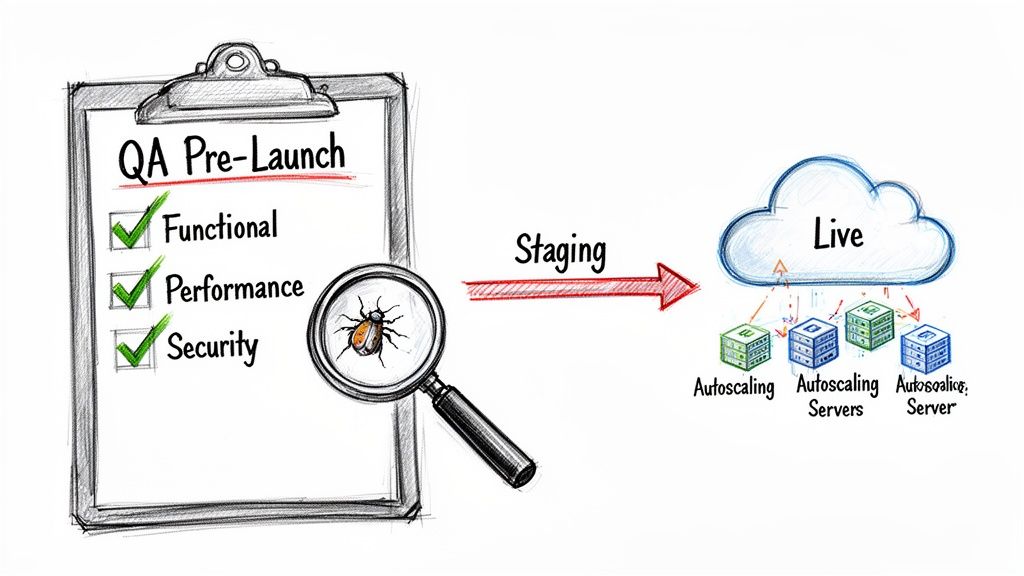
- Functional Testing: Does it actually do what it's supposed to do? We methodically test every button, form, and feature to confirm they work exactly as laid out in the project specs.
- Usability Testing: Is the app intuitive and easy to navigate? We put ourselves in the user’s shoes to sniff out any confusing navigation, awkward workflows, or frustrating dead ends.
- Performance Testing: Can the app handle the pressure? This involves stress testing to see how it performs under heavy user traffic, making sure it stays fast and responsive when it matters most.
- Security Testing: Is your app—and your users' data—locked down tight? For industries with strict rules like healthcare (HIPAA) or finance (PCI), this is absolutely paramount. We proactively probe for vulnerabilities to guard against potential threats.
Automated vs. Manual QA: When To Use Each
A question we get all the time is whether to use automated or manual testing. The real answer is, you need both. They serve different purposes and are strongest when they work together to give you complete test coverage.
Manual testing is exactly what it sounds like: a human tester navigates the application just like a real user would. It’s perfect for exploratory testing, usability checks, and verifying the overall look and feel of the UI.
Automated testing, on the other hand, uses scripts to run repetitive tests at lightning speed. This is ideal for things like regression testing—making absolutely sure that new code doesn’t accidentally break features that were already working perfectly.
A robust QA strategy is a blend of art and science. It combines the meticulous precision of automated scripts with the intuitive, human-centric perspective of a manual tester to deliver a truly polished product.
Moving From Staging To Production
Once the application has passed every QA test and all the bugs have been squashed, it's time for Deployment. This is the big moment when we move the code from a private development environment to a live server where the world can finally see it. But we don't just flip a switch.
First, the application is moved to a staging environment. This is an exact clone of the live production environment, giving us one last chance to catch any issues that might only show up in a real server setting.
After a final sign-off, we execute the go-live plan. This involves a carefully orchestrated checklist to push the code live, configure the domain, and get all the monitoring tools in place.
For applications that expect a lot of traffic, we also implement an autoscaling infrastructure. This allows the server resources to automatically ramp up or down based on user demand, ensuring the app never crashes during a traffic spike. It’s the final piece of the puzzle for a smooth, successful, and truly flawless launch.
Driving Long-Term Value With Maintenance And Modernization
Launching your app isn't crossing the finish line; it’s really just the starting gun. The race has just begun, and it’s a marathon, not a sprint. This final, ongoing web development stage—Maintenance and Modernization—is where you truly lock in the long-term value of your investment. Think of it as far more than just "keeping the lights on."
It’s a constant cycle of making sure your application stays secure, performs flawlessly, and remains competitive in a market that absolutely never stands still. This means regular updates, diligent security patching, and proactive performance monitoring are completely non-negotiable.
Beyond Bug Fixes To Proactive Evolution
Great maintenance is always proactive, never reactive. It demands a strategic approach to keeping your digital product relevant and resilient. This is the stage where your application truly evolves, adapting to new user behaviors, market shifts, and emerging technologies.
The core activities in this phase include:
- Security Patching: Routinely applying updates to frameworks, libraries, and servers to shield against newly discovered threats. A single breach can destroy user trust in an instant.
- Performance Monitoring: Using analytics tools to keep a close eye on load times, server response, and overall speed. After all, slow performance is one of the top reasons users leave.
- Feature Enhancements: Rolling out new features based on user feedback and business goals. This iterative process keeps the experience fresh and adds continuous value.
- Codebase Refactoring: Periodically cleaning up the underlying code. This improves efficiency, pays down technical debt, and makes future updates much easier and faster to implement.
The New Frontier: AI Modernization
Today, this stage is also the perfect time for AI modernization. This is how legacy systems get a new lease on life, transforming into intelligent, data-powered platforms that create a serious competitive edge. At Wonderment Apps, guiding clients through this evolution is one of our specialties.
This process involves integrating sophisticated AI models to unlock entirely new capabilities. For an ecommerce site, this could be a personalization engine that dramatically boosts conversion rates. For a fintech app, it might mean using predictive analytics to spot market trends before they happen.
Integrating AI is not just a technical upgrade; it's a strategic business decision that redefines what your application can do. It turns your platform from a static tool into a dynamic, learning system that gets smarter with every user interaction.
But managing these powerful new AI components is where many projects run into trouble. Effective AI integration requires a solid administrative backbone to control, monitor, and scale these systems without creating chaos.
This is exactly why we built our own proprietary prompt management system. It's an administrative tool that plugs directly into your application, giving you complete command over your AI integrations. It features a prompt vault with versioning to track and refine AI instructions, a parameter manager for secure database access, a unified logging system across all integrated AIs, and a cost manager that allows you to see your cumulative spend. This toolkit gives you the control you need to scale your AI initiatives with confidence, ensuring your application not only keeps up but leads its market for years to come.
Choosing The Right Partner For Your Project
Making it through every web development stage successfully takes more than just technical chops—it requires a strategic partner who is genuinely invested in what you’re trying to achieve. The right partner is a guide, someone who helps you sidestep the usual traps, tighten up timelines, and ensures the final product isn’t just working, but is truly exceptional. Picking the wrong team, on the other hand, can lead to expensive delays and a product that just doesn’t hit the mark.
Here at Wonderment Apps, we offer complete, end-to-end support that covers the entire project lifecycle, from the first strategy meeting all the way through to long-term AI modernization. We get that no two projects are the same, which is why we have flexible engagement models built to fit your specific needs and give your team the boost it needs.
Tailored Teams and Expert Staffing
For clients who need a full, self-contained team to get the job done, our Managed Projects practice is a perfect fit. We hand-pick a dedicated group of our top engineers, designers, QA specialists, and project managers specifically for your project. This team becomes an extension of your own, taking full ownership of designing, building, and launching high-performance applications that are ready to scale.
Of course, sometimes you already have a solid internal team but just need to fill a few skill gaps. Our curated staffing services let you augment your existing crew with our vetted experts in:
- React and .NET development for building powerful frontend and backend systems.
- iOS and Android development to create world-class mobile experiences.
- Specialized QA, product management, and UX design.
Choosing a development partner is one of the most critical decisions you'll make. Their expertise, communication style, and commitment to your vision will directly influence your project's outcome and long-term success.
This decision is a huge part of the journey. As you think about bringing in outside support, this guide to choosing the right app development agency is a great resource for more insights.
Whether you're starting from a blank page or looking to give an existing platform a modern overhaul, our team is ready to help you succeed at every stage. We invite business leaders to book a personalized demo of our AI modernization toolkit and start the conversation about how we can bring your next project to life.
Frequently Asked Questions
When you're diving into a web development project, a lot of questions can pop up, especially for the business leaders steering the ship. We've gathered some of the most common ones here to give you clear, straightforward answers. Think of this as your quick-reference guide to feel more confident about the entire process.
How Long Does a Typical Web Development Project Take?
This is the classic "it depends" question. The honest answer is that the timeline is tied directly to complexity. A simple informational website might take a brisk 1-3 months to get live.
But for a more complex beast, like a custom e-commerce platform or a fintech app packed with features, you're looking at a timeline of 6-12 months, sometimes even longer. The Planning stage is where we nail down a realistic roadmap. By using Agile methods, we break the project into smaller "sprints," which lets us deliver real value faster and stay flexible as things change.
What Is the Difference Between Frontend and Backend Development?
It helps to think of your app like a restaurant.
The frontend is everything your customer sees and touches—the decor, the menu design, the table settings. It's the visual, interactive part of the experience, built with tools like HTML, CSS, and JavaScript frameworks like React. This is what makes your application look and feel great.
The backend is the kitchen, the engine room that nobody sees but everyone relies on. This is where the server, database, and core logic live. It's the system that processes orders, manages data, and handles payments, all powered by robust technologies like .NET, Java, or Python.
How Do You Ensure a Web Application Is Secure?
Security isn't an afterthought; it’s a mindset woven into every single stage of development. It begins right in the Planning phase with threat modeling and selecting secure-by-design technologies. As we move into Development, our engineers follow strict best practices, like data encryption and secure coding standards, from the first line of code.
Security is a continuous process, not a one-time checklist. A truly secure application is one that is built with defense in mind from day one and is diligently maintained to protect against emerging threats.
In the QA stage, we get aggressive with security testing, including penetration tests, to find and fix vulnerabilities before they can be exploited. And it doesn't stop at launch. During Maintenance, we're constantly applying security patches and monitoring for threats. For sensitive industries like fintech and healthcare, following compliance standards like PCI DSS and HIPAA isn't just a good idea—it's mandatory.
Why Is Post-Launch Maintenance So Important?
Thinking your work is done after launch is a common mistake. Post-launch maintenance is absolutely critical for the long-term health of your application. Technology doesn't stand still, and neither do security threats, so regular updates are essential to protect your app and its users.
Maintenance also keeps your application fast and reliable as your user base grows. More importantly, it’s your chance to act on user feedback and adapt to new business goals. This is where you can continuously improve your platform, add features, and even modernize with new tech like AI to keep your competitive edge sharp.
Ready to modernize your application and scale your AI initiatives with confidence? Wonderment Apps provides an administrative toolkit that plugs directly into your software, giving you a prompt vault with versioning, a parameter manager, a unified logging system, and a cost-control dashboard.