

Your storefront recommends a product the customer already bought. Your mobile app promotes something that's out of stock. Meanwhile, marketing wants personalized messages, engineering wants fewer integrations, and finance wants to know why the AI bill keeps climbing. The vendor demo looked considerably calmer.
Personalization is easy to buy and hard to run. Your app can recommend, rank, nudge, and message in real time, but operating those experiences means managing data freshness, permissions, experiments, and failures. Add generative AI, and prompts can drift, database parameters need boundaries, logs scatter across models, and token spend becomes another production concern.
Wonderment Apps' prompt management system addresses that administrative layer inside an existing application. Its prompt vault with versioning, database-aware parameter manager, cross-AI logging, and cumulative cost manager make it relevant when personalized experiences extend beyond a vendor widget. A demo is worth booking with your actual integration questions in hand.
Buying principle: Choose the tool for the decision you need to improve, not for the longest feature list.
The useful distinction among AI personalization tools is their job: cross-channel decisioning, product discovery, lifecycle messaging, API recommendations, or CRM-native offers. Work on predictive scoring for personalized buyer experiences can help frame the decision, but a score still needs somewhere reliable to become an experience.
Treat commercial benchmarks as planning inputs, not purchase guarantees. McKinsey reports typical personalization revenue lifts of 10–15%, with results varying by sector and execution. Your selection should depend on what you can integrate, measure, and maintain, not someone else's headline.
1. Dynamic Yield by Mastercard
Dynamic Yield belongs on the shortlist when personalization needs to coordinate experiences, not just populate a recommendation carousel. Its Experience OS supports personalized journeys across web, apps, email, SMS, and other touchpoints.
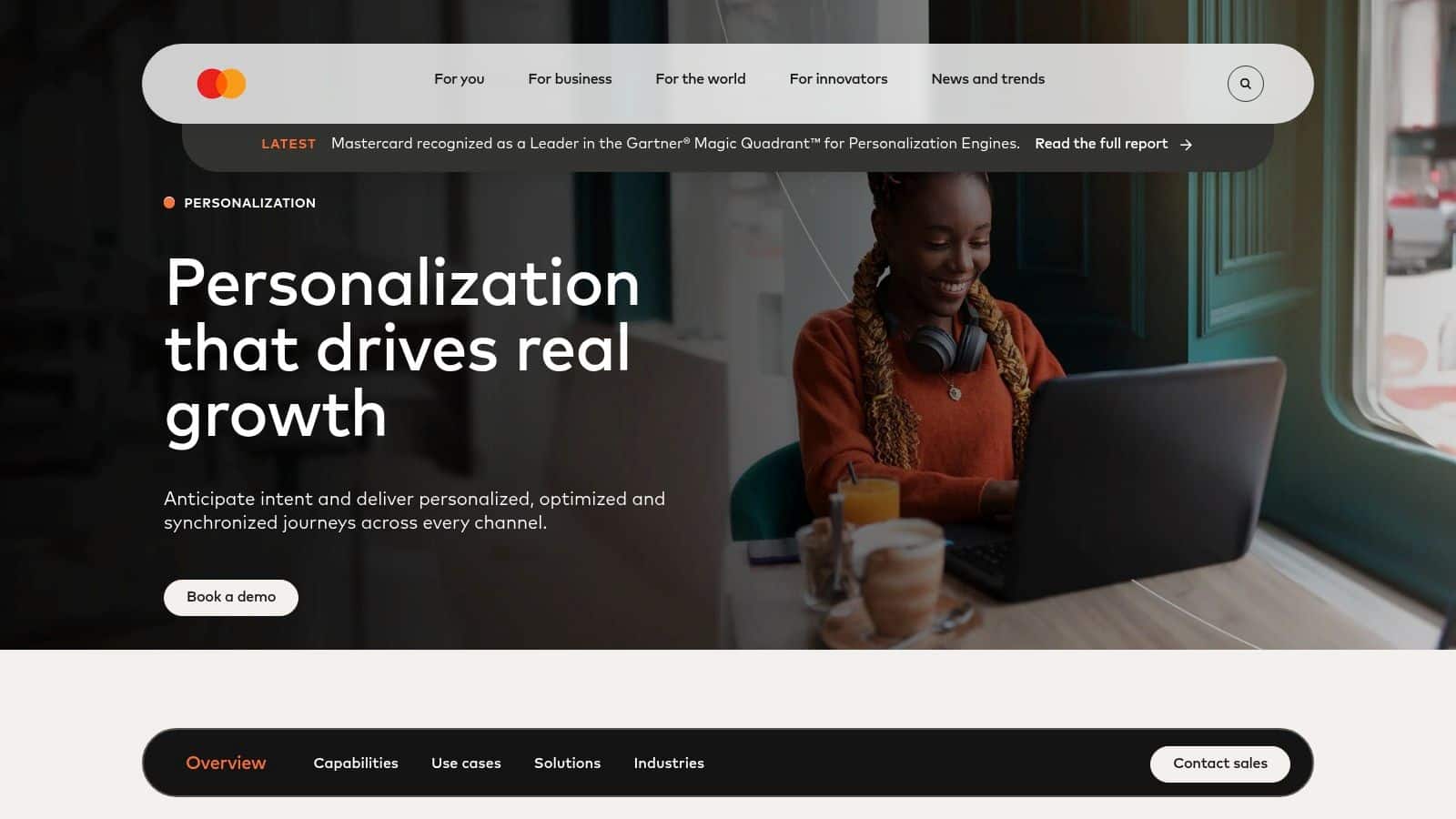
Dynamic Yield by Mastercard combines intent-informed content, product and offer selection, testing, and real-time optimization. Its capabilities include AdaptML prediction models and Shopping Muse for conversational product discovery.
That breadth makes it a reasonable candidate for larger retailers with several digital properties. It also means the buying conversation should include whoever owns customer identity, catalog feeds, application performance, and campaign operations, not marketing alone.
Where the breadth pays off
- Cross-channel coordination: Consider it when teams need related experiences across storefronts, applications, and messaging.
- Experimentation: Evaluate personalization and testing together so teams can distinguish incremental value from ordinary purchasing behavior.
- Conversational discovery: Examine Shopping Muse separately from conventional recommendations, including response accuracy and product eligibility.
The trade-off is implementation and operating effort. A broad decisioning platform won't repair inconsistent product identifiers or settle conflicting promotion rules on its own.
Public pricing isn't listed, so request a scoped proposal that separates licensing, implementation, support, and any relevant usage assumptions. Ask the team to demonstrate a complete journey using your sample data, including what happens when a product disappears from inventory.
For a broader architectural view, Wonderment's guide to ecommerce personalization software provides context for evaluating the surrounding application. The strongest fit is an organization prepared to operate personalization continuously, with clear ownership rather than an unattended collection of campaigns.
2. Bloomreach Loomi AI
A retailer with a sprawling catalog can have separate problems in search, merchandising, and messaging that all stem from disconnected data. Bloomreach Loomi AI is worth considering when those problems need a connected approach.
Bloomreach brings customer data, marketing engagement, search, and product recommendations under its Loomi AI umbrella. Behavioral signals and catalog information inform recommendations, while merchandising capabilities help teams influence product ranking and discovery.
Its attraction is the connection between finding products and communicating with customers. A team evaluating email personalization alongside website discovery may prefer that shared platform direction to maintaining unrelated decision systems.
Evaluate the connection, not just the components
Ask for a demonstration in which a shopper's behavior changes both discovery and a later message. Then inspect how the platform handles identity, consent, catalog changes, and the timing of those updates.
- Useful breadth: Search, recommendations, engagement, and merchandising can support a retailer's related workflows.
- Integration option: An announced Shopify app may offer some merchants a more direct route to cross-touchpoint personalization.
- Important qualification: Confirm which capabilities and integrations belong to the proposed package rather than assuming every Loomi-branded feature is included.
The broader platform has no public price listed in the supplied product information. Get a proposal around the workflows you'll launch, not an aspirational platform rollout.
The downside is potential overbuying. A small business that needs a related-products component may not need a broader engagement and discovery platform.
For a custom desktop or mobile application, make the data contract part of the evaluation. Product attributes, availability, behavioral events, and customer identifiers should remain understandable outside the vendor interface, so your application team can debug a poor recommendation without a guessing game.
3. Adobe Target
Adobe Target makes the most sense when your team wants personalization and disciplined experimentation in the same operating program. It's particularly relevant when Adobe already plays a substantial role in your digital stack.
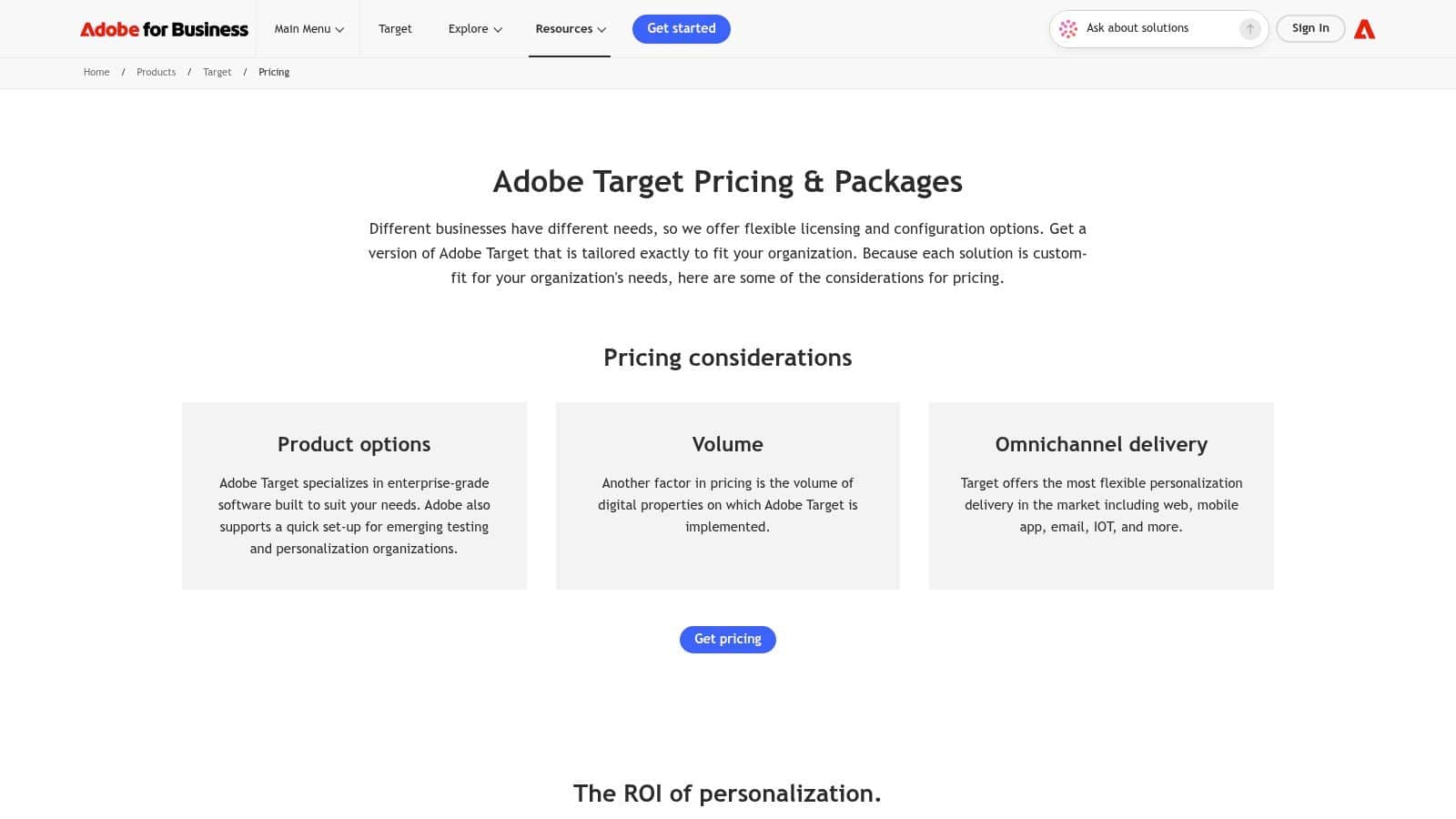
Adobe Target's product and pricing information describes a sales-led offering whose capabilities depend on the license edition. Its scope includes A/B and multivariate testing, AI-driven experience selection, and personalization across web, mobile apps, email, and other channels.
Automated Personalization, subject to edition availability, matches content variations to visitor profiles. Before signing, have the vendor identify the exact edition needed for each proposed experience.
Buy the measurement discipline too
A personalized page isn't automatically a better page. Your team should compare outcomes against a control, inspect results by meaningful audience, and account for competing experiments.
Adobe's retail research reports that 45% of retailers are implementing real-time website and app personalization. That adoption signal supports taking the capability seriously, but it doesn't establish that a particular deployment will work.
- Strength: Testing and experience selection can support a shared optimization workflow.
- Operational requirement: Teams need analytics and experimentation expertise, not just access to a visual interface.
- Commercial caveat: Custom pricing and edition differences make a written capability-to-license mapping important.
Ask how an experiment behaves across authenticated and anonymous sessions. Include mobile releases, consent changes, and overlapping promotions in acceptance testing.
Target is a stronger fit for an organization prepared to maintain an optimization practice than for a team seeking a set-and-forget widget. Budget for the people who interpret results and retire weak experiences, not only the people who publish them.
4. Optimizely Personalization
Marketing wants to change a page without waiting for an application release. Engineering wants those changes to remain testable, accessible, and reversible. Optimizely Personalization is a candidate for that shared workflow.
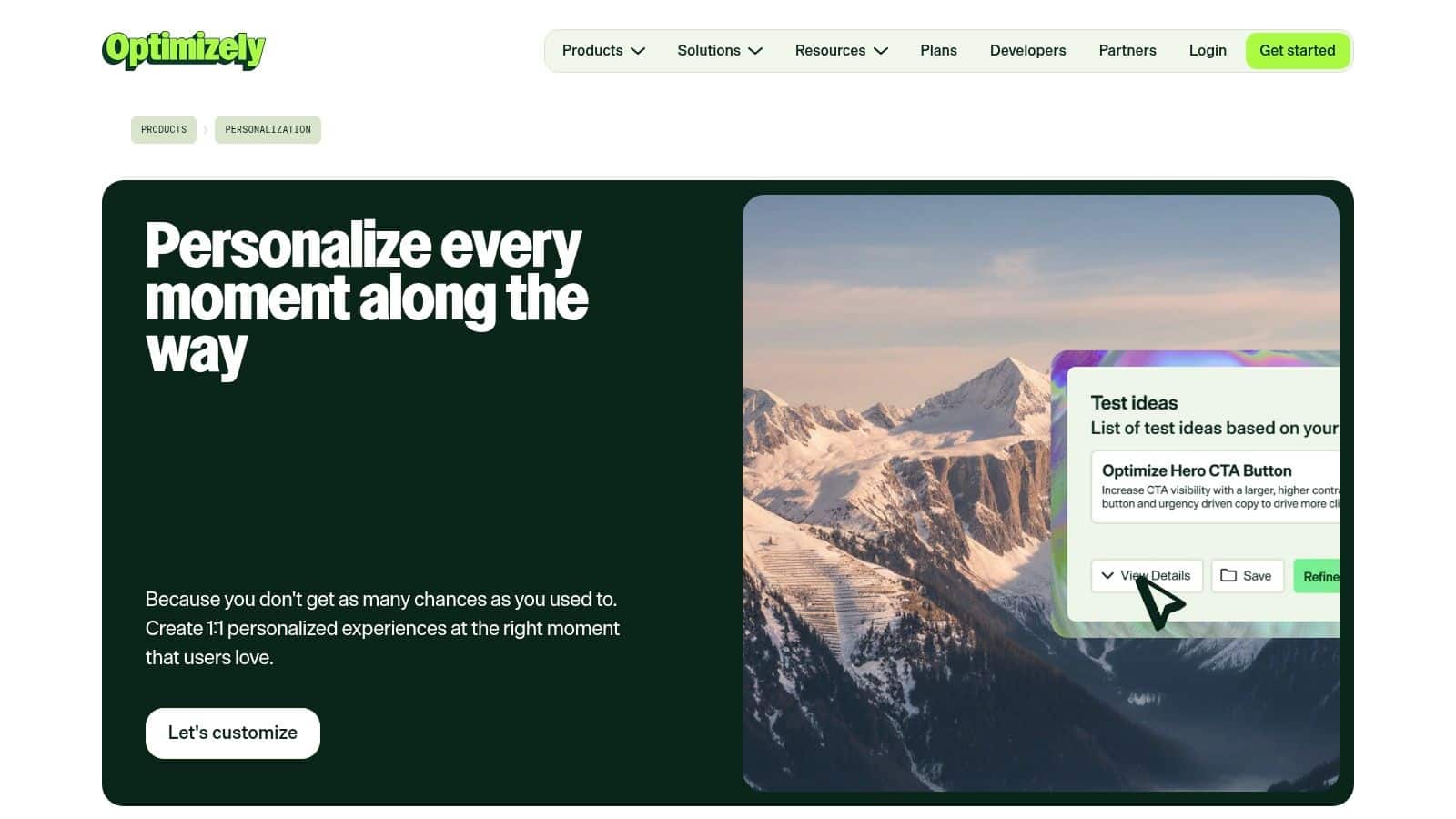
Optimizely Personalization supports audience creation from multiple data sources, visual editing, behavioral targeting, real-time delivery, and campaign measurement. Its relationship with experimentation tools is relevant for teams personalizing websites, content experiences, and B2B journeys as well as retail storefronts.
The practical advantage is reducing the need to code every content variation. The practical boundary is that visual editing shouldn't become a route around your release standards.
A marketer can own the message while engineering still owns the application's safety rails.
Where to draw the boundary
Use visual changes for approved presentation patterns. Route modifications involving authentication, account permissions, sensitive information, or core application behavior through normal engineering review.
Ask the vendor to demonstrate audience creation using events from your actual stack. A segment that looks sensible in a slide deck can behave differently when users share devices, browse anonymously, or move between company accounts.
- Pros: Related targeting and experimentation workflows, visual experience creation, and applicability beyond ecommerce.
- Cons: Unlisted public pricing, dependence on reliable audience data, and potential packaging differences across products.
- Purchase question: Which experimentation, data, and personalization capabilities are explicitly included in the contract?
The best fit is a team that already knows which experiences it wants to test and who will approve them. If your events are unreliable or your audience definitions are disputed, resolve those issues alongside the pilot rather than expecting the editor to make them disappear.
5. BrazeAI
BrazeAI is an engagement choice, not a substitute for every personalization system in your application. Start with it when the job is choosing useful messages, offers, timing, and channels across an ongoing customer relationship.
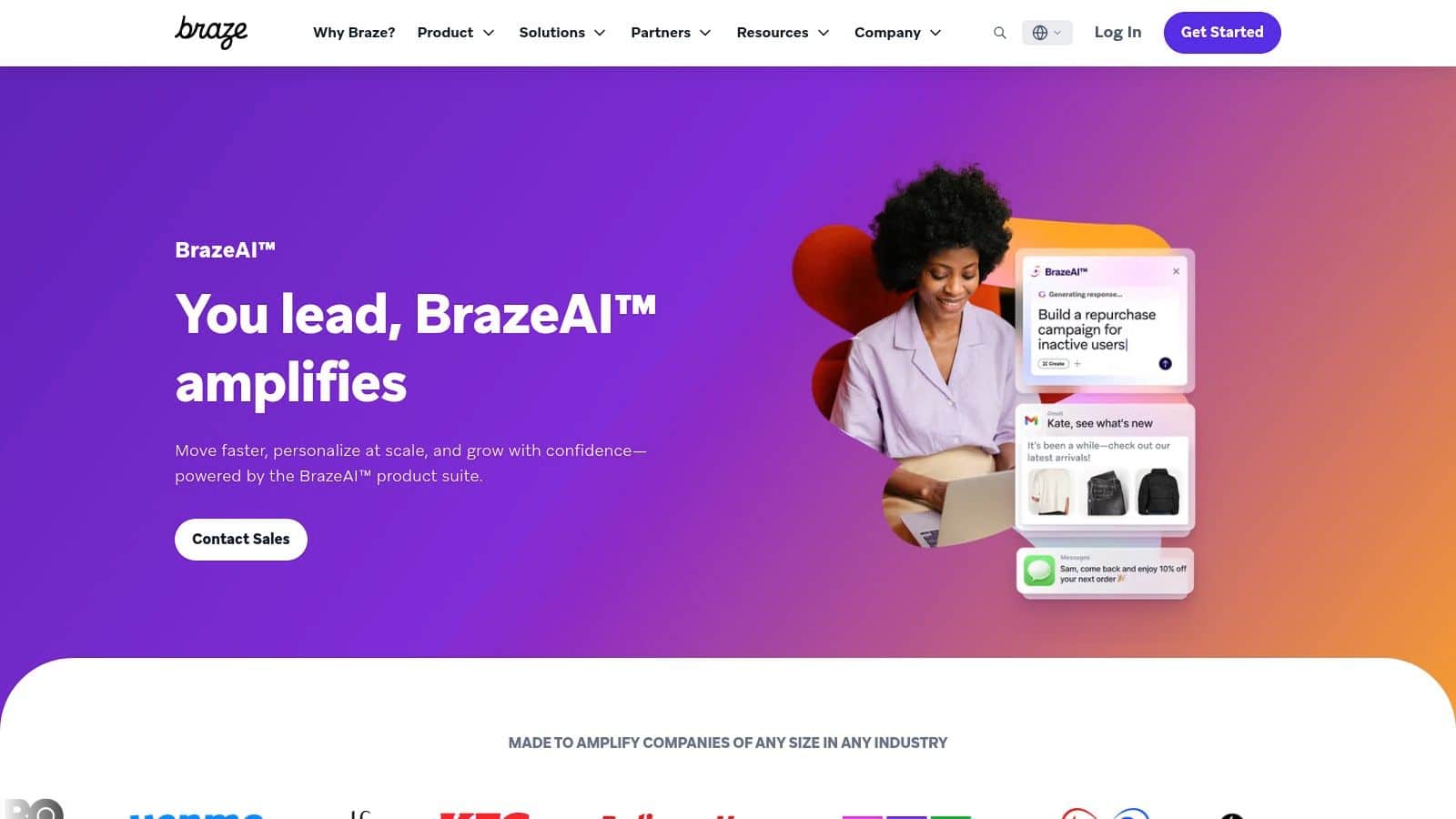
BrazeAI combines personalized messaging and content generation with AI item recommendations, cross-channel journey optimization, campaign testing, and performance analysis. That combination is relevant to mobile apps, retailers, and subscription businesses with recurring engagement needs.
A sensible evaluation starts with a lifecycle problem. For example, test whether a message remains useful after the customer completes the action that originally triggered it.
Make cancellation part of the journey
Your integration should define when to send a message and when not to send it. Purchase completion, changed preferences, unavailable products, and support escalations should all have explicit handling.
- Strong fit: Lifecycle messaging that responds to customer behavior across mobile and digital channels.
- Useful connection: Item recommendations can become part of an orchestrated message rather than a disconnected onsite feature.
- Scope limitation: Don't assume an engagement platform replaces search, browse, or every onsite decisioning requirement.
Pricing is available through sales and may depend on platform scope and usage. Ask what changes commercially as your audience, message activity, and enabled capabilities expand.
The integration work includes customer events and item catalogs, so assign ownership before launch. If marketing cannot tell whether a recommendation used current product data, engineering needs a better diagnostic path.
Evaluate unsubscribe behavior and user preferences alongside campaign performance. An effective engagement program should make it easy for customers to choose less engagement, not merely give the team more opportunities to contact them.
6. Algolia AI Personalization and Recommendations
For a custom storefront or headless build, Algolia offers a developer-oriented route to connecting search, browse, and recommendations. It's worth evaluating when your team wants control over the interface rather than another externally managed page experience.
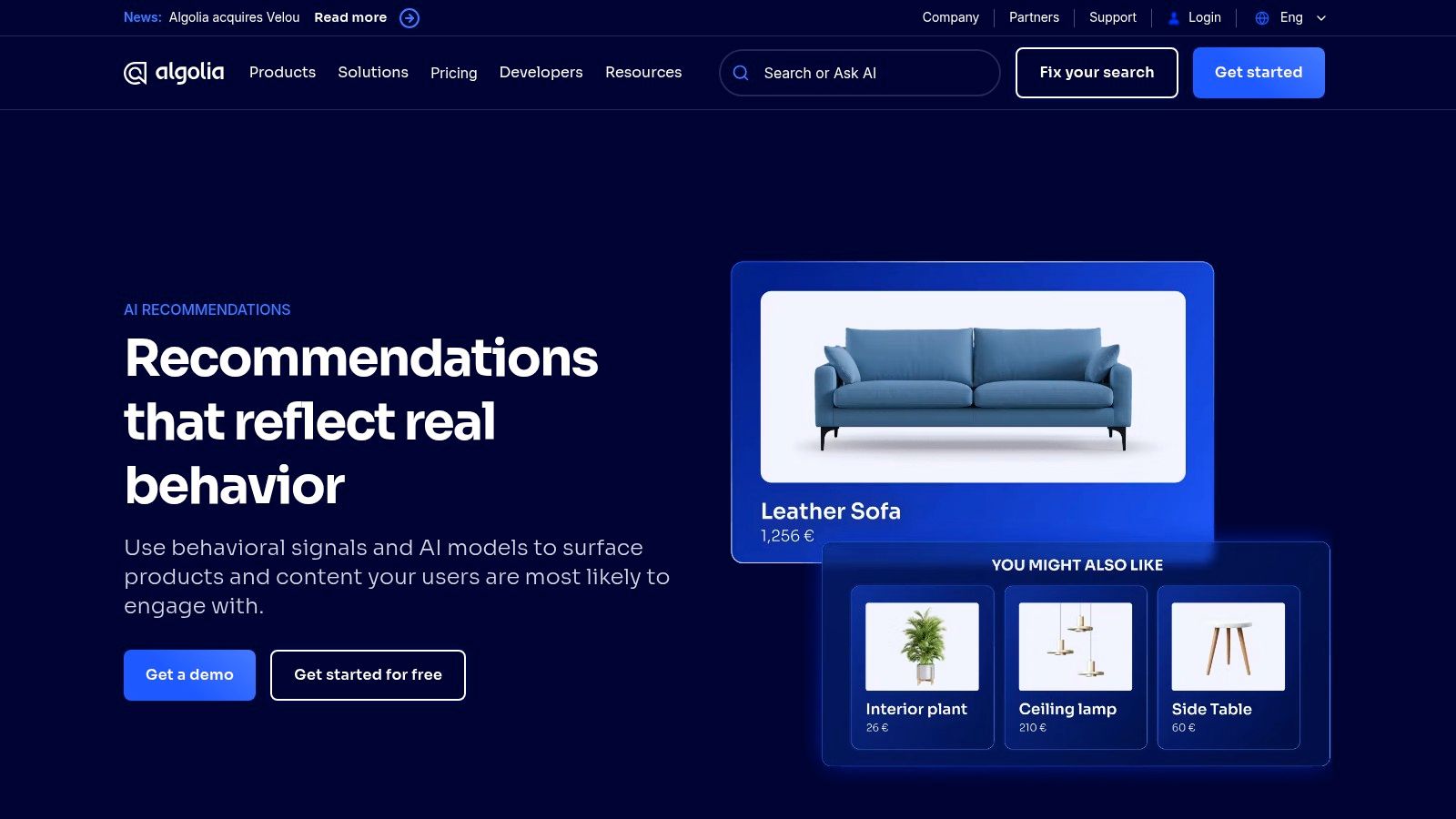
Algolia AI Recommendations supports related, complementary, trending, and personalized items, using catalog information and behavioral events. Its APIs, prebuilt recommendation models, analytics, and merchandising controls suit teams building their own application experiences.
The appeal is architectural flexibility. The responsibility is that your developers still need to integrate events, render results, handle unavailable items, and design accessible interactions.
Keep relevance and eligibility separate
A model might rank an item highly while your business rules make it ineligible for a particular shopper. Apply explicit constraints for availability, region, permissions, or other applicable restrictions rather than treating recommendation relevance as authorization.
- What works: Shared discovery infrastructure with business rules alongside machine-learning recommendations.
- What takes effort: Event instrumentation, catalog maintenance, interface development, and application-specific fallbacks.
- What to price: The selected products and expected usage, including how the commercial model changes as activity grows.
Wonderment's explanation of an AI recommendation engine is useful for separating ranking logic from the application surrounding it. For a merchandising-specific perspective, ClothME's guide to apparel personalization offers another context for planning product suggestions.
Ask for a pilot that includes missing events and stale inventory, not just clean catalog data. The strongest recommendation interface is still a poor experience if it points customers toward products they can't buy.
Algolia's fit improves when your engineering team wants that control and accepts the associated implementation work.
7. Constructor
Constructor focuses on ecommerce discovery as a connected system. It's a candidate for retailers that want search, browse, recommendations, and conversational shopping evaluated against retailer-defined business goals.
Constructor's recommendations platform uses clickstream behavior and machine-learning algorithms to personalize placements across product, category, cart, and post-purchase pages. Its broader discovery scope includes merchandising controls and an AI Shopping Agent.
That ecommerce focus may suit complex catalogs better than a general-purpose content targeting tool. Its API-first and headless positioning is also relevant when discovery must appear inside custom storefronts or applications.
Specify the goal before optimizing
Conversion and revenue are useful objectives, but your evaluation should also account for margin, returns, product suitability, and repeat purchasing. Those are recommended guardrails, not a claim that every measure is included in a particular Constructor package.
A pilot should give merchandisers a realistic task: adjust eligibility or promote an approved range while preserving recommendation relevance. Developers should inspect how those changes reach the application and how they can diagnose unexpected results.
- Pros: Ecommerce-specific discovery, connected search and recommendation capabilities, and merchandising influence.
- Cons: Enterprise-oriented scope may be excessive for smaller stores, public pricing isn't displayed, and integration depends on reliable catalogs and shopper events.
- Commercial approach: Request a scoped sales proposal with implementation responsibilities and operational support clearly separated.
Don't let the conversational shopping demonstration distract from catalog quality. A polished answer is still unhelpful when the underlying size, compatibility, price, or availability information is wrong.
Constructor is most compelling when the retailer intends to improve discovery as a sustained program. A team that only needs a simple related-items placement should compare that scope carefully against a narrower recommendation service.
8. Recombee
Not every team wants an enterprise platform evaluation before testing a recommendation. Recombee provides a narrower starting point: a recommendation engine as a service for web and mobile products.
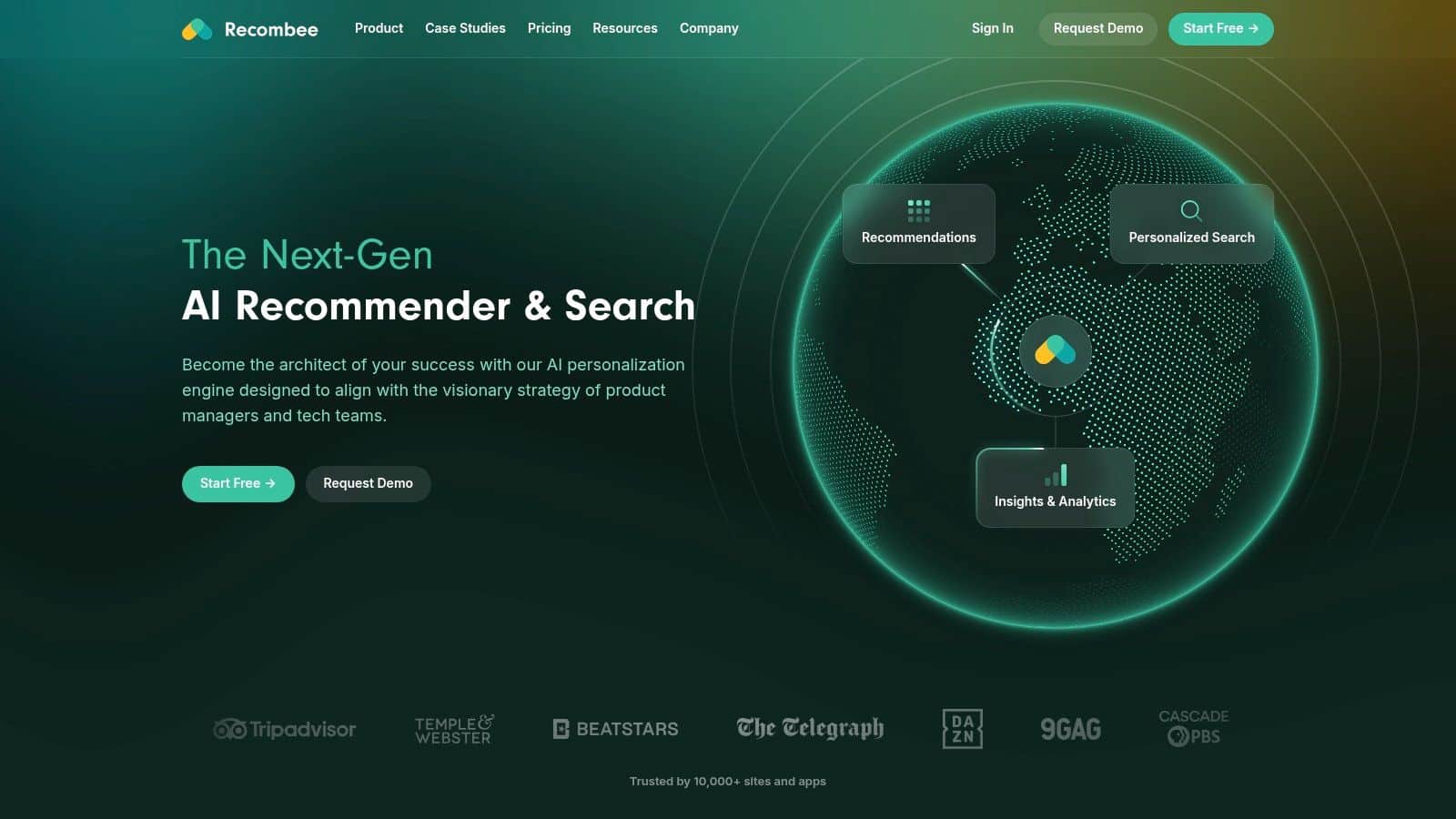
Recombee offers personalized user and related-item recommendations through REST APIs, SDKs, and no-code widgets. Its published pricing includes a free tier and paid plans, which helps teams screen commercial fit without beginning with a sales conversation.
The service can support product catalogs, media libraries, publishing, and other item-based experiences. Rules, filters, boosters, analytics, and A/B testing provide ways to adjust and evaluate results.
A focused engine still needs an operating plan
Published pricing improves visibility, but it doesn't remove the need to model usage. Check catalog limits, request allowances, support terms, and the service guarantees attached to the proposed plan.
- Accessible evaluation: A free tier can support an initial assessment, subject to its usage limits.
- Flexible integration: APIs, SDKs, and widgets offer different routes depending on your team's engineering capacity.
- Defined boundary: Recommendations alone don't provide complete lifecycle messaging or customer-journey orchestration.
For a media application, assess whether recommendations help users discover worthwhile content rather than repeatedly showing familiar material. For commerce, test exclusions and unavailable items before evaluating visual polish.
Human-centered recommender research identified transparency, trustworthiness, and perceived accuracy as the strongest contributors to user satisfaction. That supports measuring more than clicks when assessing any recommendation engine.
Recombee is a sensible candidate when your team wants a focused service and retains responsibility for the surrounding experience. Its narrower remit can be an advantage, provided you don't expect it to become your entire customer engagement stack.
9. Salesforce Personalization
Salesforce Personalization deserves attention when Salesforce customer data already anchors your operating model. The question isn't whether it can personalize an offer, but whether the required data and platform dependencies fit your architecture.
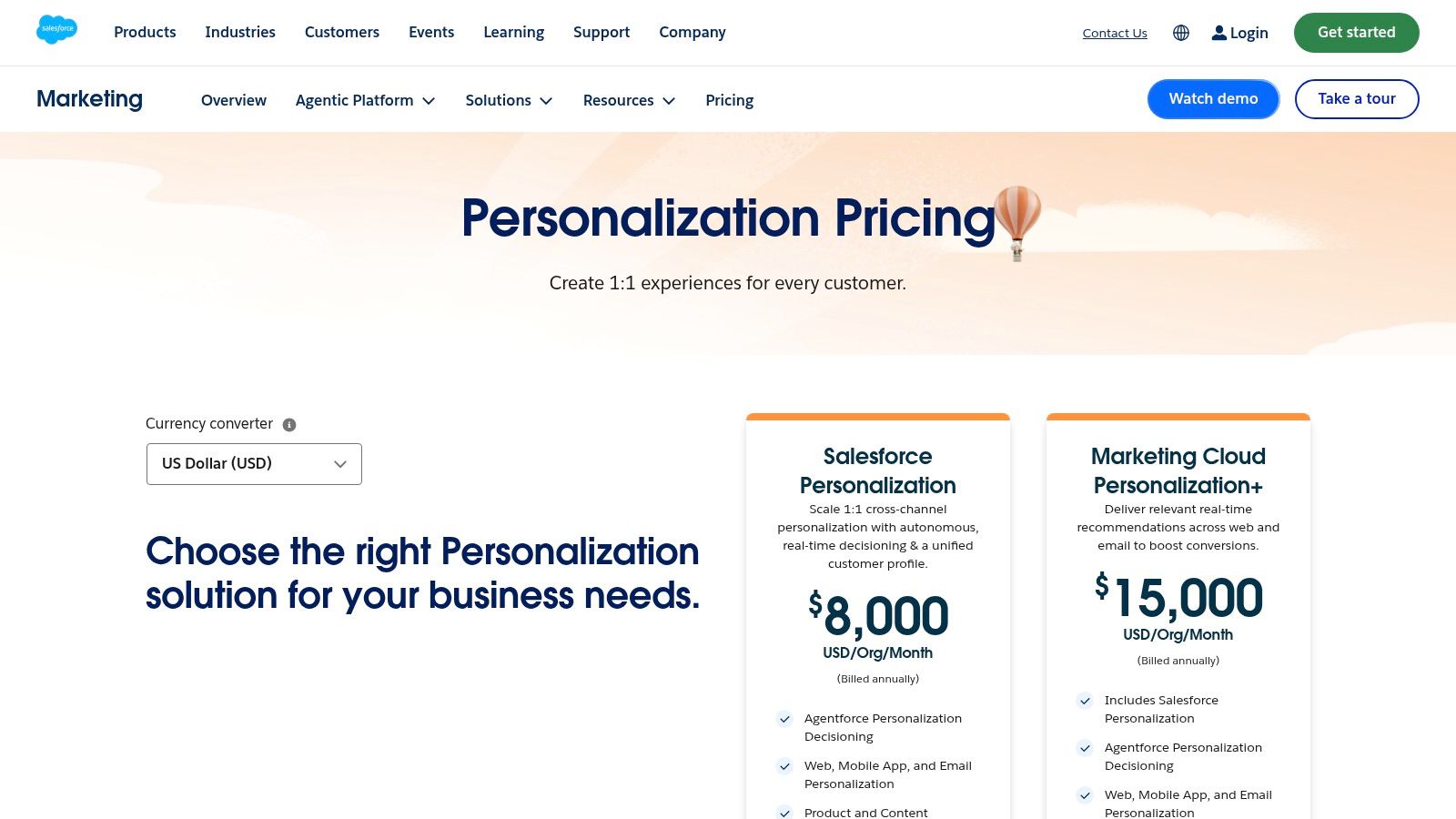
Its capabilities include real-time decisioning, product and content recommendations, and personalized experiences across website, email, and mobile touchpoints. Integration with Salesforce data and products makes it relevant to organizations already invested in that ecosystem.
Salesforce lists Einstein Personalization Starter at $96,000 per organization per year, billed annually, and available only to existing Data 360 customers. That price and prerequisite apply to the stated edition, not every Salesforce personalization offering.
Treat packaging as architecture
Before comparing proposals, map your required capabilities to the exact product names and editions. Ask which data services, activation paths, integrations, and implementation work are included.
- Potential advantage: Existing Salesforce profiles and marketing workflows may make it a more natural organizational fit.
- Relevant breadth: Recommendations and decisioning can support several customer touchpoints.
- Material constraint: The stated Starter edition requires existing Data 360 access, so its price isn't a standalone total-cost estimate.
For custom applications, inspect how a customer identifier moves between your app and Salesforce. Include consent updates, account merging, deletion workflows, and temporary integration failures in the design discussion.
A familiar ecosystem can reduce some organizational friction, but don't assume it removes implementation work. Your team still needs to determine which system owns each decision and how it can reconstruct a questionable offer.
Shortlist Salesforce Personalization when its data dependencies align with your existing investment. If adopting it would require a broader platform migration, compare that full scope against more focused alternatives before approving the personalization budget.
10. Salesforce Commerce Einstein
A team already running a Salesforce Commerce storefront faces a different buying question than everyone else on this list. Commerce Einstein earns an evaluation slot before any standalone discovery platform, because the marginal cost of a native capability usually sits below the integration cost of a new vendor.
Salesforce Commerce Einstein supports product recommendations informed by shopper activity, storefront activity tracking, semantic search, product discovery, and reporting on recommendation performance. Its case is strongest where the storefront already runs on Salesforce Commerce products.
Where Salesforce Personalization handles broader customer decisioning, this evaluation starts at the storefront experience. Ask what your current edition includes and which recommendation or discovery features sit behind extra configuration or contract scope.
Confirm the current implementation path
Implementation guidance for recommendation components changes over time, so verify the current path against Salesforce's documentation rather than relying on dated tutorials. An old walkthrough can become an accidental architectural commitment without anyone noticing.
Native fit is the strongest argument here. Einstein plugs into existing merchandising workflows and storefront components instead of asking your team to wire in an external feed. The trade-offs live in the contract and the boundaries. Pricing typically depends on your Commerce edition, and you should test the proposed integration against your actual storefront architecture rather than assuming every vendor example applies to it.
Wonderment's guide to what ecommerce personalization is helps separate the customer experience you want from the mechanism delivering it. A native feature can be convenient and still miss the journey you need to fix.
During the pilot, trace a recommendation end to end: shopper activity in, rendering logic in the middle, performance reporting out. Watch for missing activity, consent restrictions, unavailable inventory, and inconsistent behavior between desktop and mobile layouts.
Native doesn't mean maintenance-free. Assign ownership for event quality, recommendation placements, release compatibility, and ongoing performance review before the rollout expands.
Top 10 AI Personalization Tools: Feature Comparison
| Platform | Core Capabilities | Best Fit | Distinctive Strength | Pricing |
|---|---|---|---|---|
| Dynamic Yield by Mastercard | Cross-channel personalization, testing, and real-time decisions | Large retailers and brands | AdaptML predictions and conversational product discovery | Not publicly listed; contact sales |
| Bloomreach Loomi AI | Personalization, search, recommendations, and merchandising | Retailers with large catalogs or multiple channels | Connects marketing engagement with product discovery | Not publicly listed |
| Adobe Target | Personalization, A/B testing, and multivariate testing | Organizations using Adobe products | Combines experience targeting with experimentation and measurement | Custom pricing; features vary by edition |
| Optimizely Personalization | Audience targeting, visual editing, and campaign measurement | Teams with an established experimentation program | Visual tools for creating targeted experiences | Not publicly listed |
| BrazeAI | Personalized messaging, recommendations, and journey optimization | App, retail, and subscription businesses | Coordinates recommendations with customer messaging | Contact sales |
| Algolia AI Personalization and Recommendations | Personalized search, browse, and product recommendations | Custom storefronts and headless commerce teams | Developer-friendly APIs with merchandising controls | Varies by products and usage |
| Constructor | Ecommerce search, browse, recommendations, and conversational shopping | Larger retailers with complex catalogs | Discovery tools optimized for retailer-defined KPIs | Contact sales |
| Recombee | Recommendations via APIs, SDKs, and no-code widgets | Web and mobile products across commerce, media, and publishing | Published plans, including a free tier | Free tier and paid plans; usage limits apply |
| Salesforce Personalization | Real-time profiles, recommendations, and cross-channel decisioning | Organizations using Salesforce data and marketing tools | Integrates with the Salesforce ecosystem | Einstein Starter listed at $96,000/year; requires Data 360 |
| Salesforce Commerce Einstein | Storefront recommendations, semantic search, and product discovery | Merchants using Salesforce Commerce | Native fit with Salesforce Commerce storefronts | Depends on Commerce edition and contract |
The Layer That Makes Personalization Stick
Choose AI personalization tools by the job, then design the operating model around them. Dynamic Yield, Adobe Target, and Optimizely belong in evaluations for governed experience decisions; Bloomreach, Algolia, Constructor, and Salesforce Commerce Einstein address product discovery from different architectural starting points.
Braze fits lifecycle engagement, while Recombee offers a focused route to API-first recommendations. Salesforce Personalization deserves a closer look when Data 360 already anchors the stack and the proposed edition fits your requirements.
The distinction between predictive personalization and generative AI matters too. A ranking model doesn't necessarily need prompts, but a shopping assistant or personalized content generator introduces prompt versions, database-connected parameters, model responses, and token costs that need their own controls.
Make the application dependable first
Clean events, consistent identifiers, maintained catalogs, and explicit consent boundaries should precede ambitious automation. If your team needs to unify Meta, TikTok, and web interactions, define which identities can legitimately be connected and which signals belong in each decision.
Twilio's consumer research found that 84% wanted control over personalization settings. Build preference controls, understandable recommendation explanations, opt-outs, and human escalation into the experience rather than treating them as administrative leftovers.
Operating rule: Give customers a useful recommendation and a clear way to change what informed it.
Test trust alongside commercial performance. Compare personalized experiences against a control while monitoring margin, repeat behavior, complaints, preference changes, and application latency, rather than rewarding clicks alone.
Discovery also extends beyond your own interface. Deloitte reports that 63% of surveyed consumers had used AI-powered search tools or assistants to find products or services in the prior year, which makes accurate product feeds, current inventory, and monitoring of generated product information relevant beyond onsite recommendations.
Give the team a practical control plane
Wonderment Apps' administrative toolkit fits the custom application layer around these experiences. Its prompt vault with versioning supports managing prompt changes, while its parameter manager connects prompts with internal database context such as customer, product, or inventory information.
The toolkit also includes logging across integrated AI models and a cost manager showing cumulative spend. Those capabilities give developers and entrepreneurs an administrative place to manage AI behavior and review expenditure rather than scattering the work across application code and separate provider interfaces.
These controls complement a personalization engine; they don't replace catalog hygiene, permissions, experimentation, or QA. Keep authorization in application services, restrict database access by purpose, and establish fallback behavior when a model or external integration fails.
When choosing an engineering partner, ask who owns event instrumentation, security review, load testing, model updates, and support after launch. A credible delivery plan should cover desktop and mobile experiences, peak-load behavior, rollback, observability, and maintenance as clearly as the initial demo.
Book a prompt management demo with a real personalization workflow, sample data boundaries, and your current cost questions. That makes the conversation about operating a durable application, not adding another ungoverned AI bill.
Wonderment Apps offers AI modernization, custom web and mobile development, and an administrative toolkit for prompts, database-connected parameters, AI logging, and cumulative cost visibility. Visit Wonderment Apps to book a demo and discuss how to integrate personalization into your existing application with clear data boundaries, measurable outcomes, and a maintainable delivery plan.