

The Future of Health Is on Your Phone
Healthcare isn’t something that only happens inside a clinic or hospital anymore. We've entered an era where your phone is a powerful tool for managing your well-being, talking to doctors, and getting care that’s built just for you. The market for mobile health apps is absolutely exploding, with some people predicting it will blow past $268 billion by 2034. This incredible growth is exactly why professional healthcare app development services are the engine driving this huge change in how we approach patient care.

This shift is about more than just convenience—it's about fundamentally putting patients in the driver's seat and making the whole system more efficient. From virtual appointments and remote monitoring to helping manage chronic conditions, mobile apps are closing the distance between patients and providers in ways we've never seen before. They offer instant access to medical records, make booking appointments a breeze, and push critical health reminders right to your screen.
A New Era of Intelligent Healthcare
The next big step in this evolution is being powered by Artificial Intelligence (AI). AI is completely modernizing medical apps, transforming them from simple digital checklists into intelligent health companions. These apps can now start to predict health risks, give out personalized wellness advice, and even help doctors make faster, more accurate diagnoses. The potential here is massive—better patient outcomes and less administrative headache for providers.
But let's be honest, weaving sophisticated AI into a healthcare app can feel like an overwhelming task. The sheer complexity and cost of building the required backend systems from the ground up often stop great ideas dead in their tracks. This is where modern tools and platforms are changing the game.
Imagine being able to plug advanced AI capabilities into your new or existing application without the usual headaches. A dedicated prompt management system can make this a reality, providing a central hub for controlling AI interactions and managing data securely.
An administrative tool like this simplifies the whole process. It comes packed with features that speed up development and ensure you're implementing AI responsibly. Wonderment has developed one such tool that entrepreneurs and developers can plug into their existing app or software to modernize it for AI integration. If this sounds interesting, we’d love to show you a demo.
By using a system like this, entrepreneurs and development teams can pour their energy into what they do best: creating an amazing user experience, knowing the complex AI plumbing is already taken care of. This is just one piece of the broader digital transformation in the healthcare industry that’s making care more effective and easier to access for everyone. As we look ahead, building a great healthcare app means building for an intelligent, connected future.
Understanding the Foundations of a Great Healthcare App
Building a healthcare app isn't like creating the next viral game or social media platform. It's less like building a house and more like constructing a state-of-the-art hospital—every single component has to meet the absolute highest standards for safety, reliability, and security. Professional healthcare app development services are built around this specialized craft, carefully balancing innovative technology with strict, non-negotiable regulations.
This demanding field is also seeing incredible growth. The global market for patient-focused apps, which was USD 14.84 billion in 2024, is expected to skyrocket to USD 72.87 billion by 2034. This explosion shows just how vital these digital tools have become for patients and providers alike.
To create an app that actually succeeds and helps people, you have to get a few core pillars right from the start. These aren't just features you can add later; they're the bedrock of any trustworthy digital health product.
The Three Pillars of Trust in Healthcare Apps
Before a single person logs in, your app has to be built on a foundation of trust. That trust is earned through obsessive attention to detail in three critical areas.
-
Ironclad Data Security: Protecting patient health information (PHI) is everything. A data breach in healthcare isn't just a PR headache; it's a massive violation of patient trust with crippling legal and financial penalties. That means building in robust security from day one: end-to-end encryption, secure cloud architecture, multi-factor authentication, and regular security audits are the bare minimum.
-
Navigating Regulatory Compliance: Healthcare is one of the most heavily regulated industries on the planet. In the U.S., the Health Insurance Portability and Accountability Act (HIPAA) is the law of the land for protecting patient data. Your development partner needs deep, proven experience building HIPAA-compliant software, which dictates everything from how data is stored and sent to who is allowed to see it.
-
Seamless Interoperability: A healthcare app can't exist on an island. It needs to talk to other critical systems, like Electronic Health Records (EHRs). Interoperability is what allows your app to securely exchange data with these systems using standards like FHIR (Fast Healthcare Interoperability Resources). This is how you create a connected, efficient experience instead of just another data silo.
A truly great healthcare app feels like a seamless extension of the care journey. It doesn't create new data silos; it connects existing ones, making information more accessible and actionable for both patients and their doctors.
Designing for People First
All the technical plumbing in the world doesn't matter if the app is a pain to use. In healthcare, your users could be anyone from a tech-savvy millennial tracking their fitness to a senior citizen managing multiple chronic conditions. An intuitive user experience (UX) isn't a nice-to-have; it's essential for the app to be effective.
For healthcare apps that are classified as medical devices, there's another major hurdle. Understanding the complex FDA approval process for medical devices is absolutely crucial to bringing these kinds of digital health tools to market legally and safely.
A great UX in a medical app always prioritizes:
- Clarity and Simplicity: Using plain language and avoiding confusing medical jargon.
- Accessibility: Making sure the app is usable for people with disabilities by following Web Content Accessibility Guidelines (WCAG).
- Intuitive Navigation: Users might be under stress or not feeling well. They need to find what they're looking for fast, without any guesswork.
Building to Scale and Evolve
Finally, a successful healthcare app has to be built for the long haul. Scalability means your application can handle a growing number of users—from one hundred to one million—without slowing down or compromising security. This requires a forward-thinking approach to the app's architecture and technology choices right from the beginning, setting you up for long-term success.
Finding Your Niche in the Digital Health World
The term "healthcare app" is incredibly broad. It can mean anything from a simple step counter to a complex, hospital-wide management system. To build something people will actually use, you have to find your specific place in this vast ecosystem. Pinpointing your niche is the first step—it clarifies who your users are, the exact problem you’re solving, and the unique challenges you’ll need to overcome.
The market for these tools is growing fast. Really fast. The mHealth app market hit USD 43.13 billion in 2025 and is on track to explode to USD 154.12 billion by 2034. While clinical apps currently hold the top spot, the fitness and wellness categories are catching up quickly, proving just how diverse the needs are. You can get the full story from the mHealth app market forecast on Precedence Research.
To help you find your focus, let's break down four of the most impactful categories in digital health today. Each one serves a different purpose and plays by its own set of rules.
Telehealth and Telemedicine Platforms
Think of telehealth apps as the digital bridge connecting patients to their doctors for virtual visits. They're much more than a simple video call; they're secure, specialized platforms built for healthcare. They completely remove geography from the equation, making it easier for people to get care for routine check-ups, mental health sessions, or follow-ups with specialists.
- Real-World Example: Teladoc is a household name here, offering on-demand virtual care that lets you talk to a doctor 24/7 over the phone or video.
- Key Challenge: The tech has to be rock-solid. You need high-quality, stable video streaming and absolute security to protect private conversations. Integrating with messy scheduling and billing systems is another common headache.
The image below shows the non-negotiable pillars that every single healthcare app needs to be built on, no matter what its niche is.
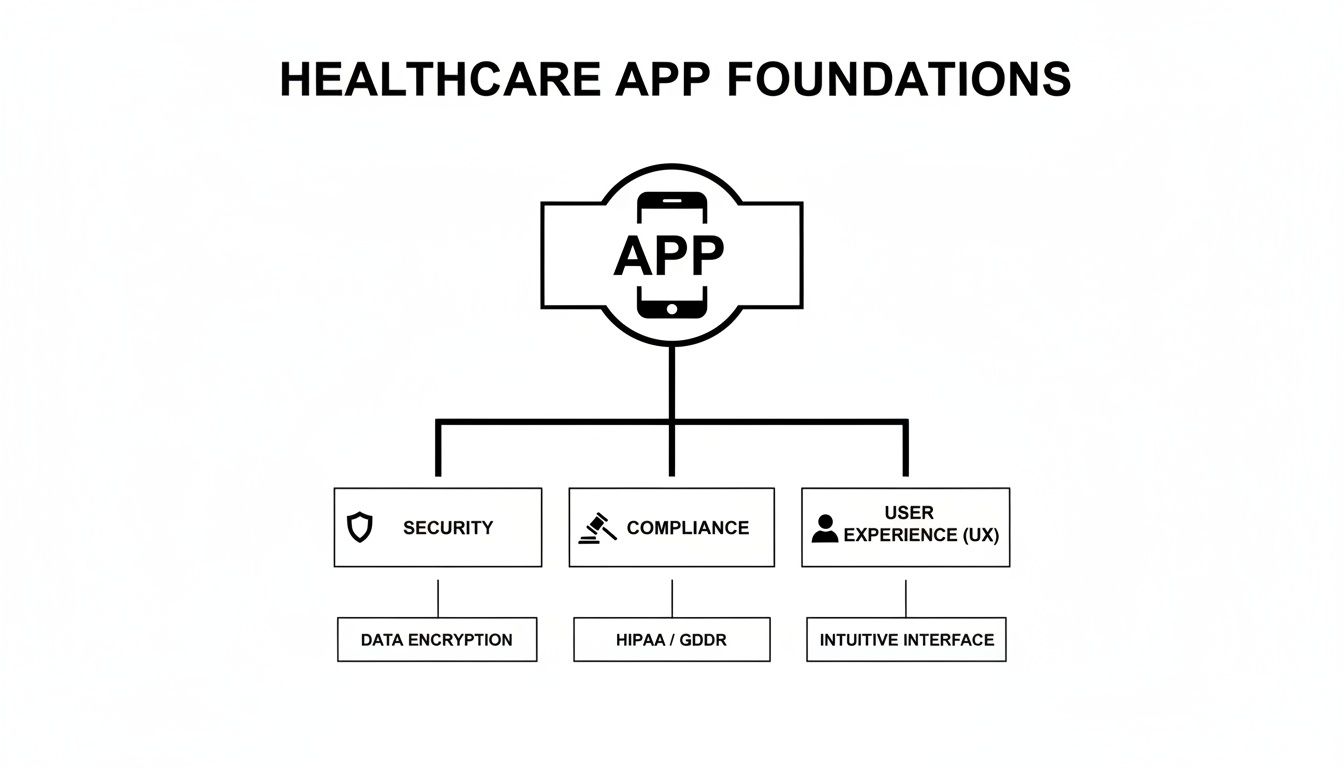
This really drives home the point that things like security, compliance, and a great user experience aren't just features you tack on at the end. They are the foundation.
Remote Patient Monitoring (RPM)
Remote Patient Monitoring (RPM) apps give doctors a window into a patient's health from afar. These apps hook up to wearable devices—think blood pressure cuffs, glucose meters, or smartwatches—to pull in vital signs and other data in real-time. It’s a game-changer for managing patients after surgery or helping people with chronic conditions stay on track.
- Real-World Example: The Dexcom G6 app continuously tracks glucose levels for people with diabetes, sending alerts to them and anyone they've chosen to share the data with.
- Key Challenge: Getting devices to talk to the app reliably and securely is the biggest technical hurdle. You’re dealing with Bluetooth connections and various APIs that all need to play nicely together. The app also has to translate complex medical data into something both patients and their doctors can easily understand.
A great RPM app doesn't just collect data; it turns that data into actionable insights. It empowers patients to understand their health trends and helps doctors intervene before a minor issue becomes a major problem.
Chronic Disease Management
These apps are designed to be a daily sidekick for patients managing long-term conditions like diabetes, heart disease, or asthma. They provide tools for everything from tracking medications and logging symptoms to accessing educational content and personalized care plans. The whole point is to empower people to take an active role in their own health journey.
- Real-World Example: MySugr is a fantastic app for diabetes management. It makes it simple for users to log blood sugar levels, track carbs, and even estimate insulin doses.
- Key Challenge: Keeping users engaged is everything. These apps have to be incredibly easy and even motivating to use every single day, for years on end. Personalization is what makes the experience feel genuinely helpful and relevant.
Clinical and Hospital Workflow Solutions
This category shifts the focus to the professionals delivering the care. These apps aim to make hospital operations smoother, cut down on paperwork, and improve how clinical staff communicate. They can include everything from secure messaging and mobile access to patient records to tools for scheduling and managing clinical tasks.
- Real-World Example: Epic Rover is used in tons of hospitals. It gives clinicians secure access to patient charts, medication administration records, and other critical data right on their mobile devices.
- Key Challenge: The biggest obstacle by far is interoperability. These apps must plug seamlessly and securely into existing Electronic Health Record (EHR) systems, which are notoriously complex and siloed. Plus, the user experience has to be designed for a fast-paced, high-stakes environment where every second counts.
Each of these categories requires a different set of features to be successful. We've put together a table to help you see the key differences at a glance.
Key Features Across Healthcare App Categories
This table compares essential features required for different types of popular healthcare applications, helping you prioritize your development roadmap.
| App Category | Must-Have Features | Primary User | Key Compliance Focus |
|---|---|---|---|
| Telehealth | Secure video/audio calls, appointment scheduling, e-prescribing, patient portals, integrated billing | Patients & Doctors | HIPAA, HITECH |
| Remote Patient Monitoring | Device integration (Bluetooth/API), real-time data dashboards, customizable alerts, data trend reporting, secure messaging | Patients & Clinicians | HIPAA, FDA (if applicable) |
| Chronic Disease Management | Medication reminders, symptom/activity logging, educational content, goal setting, community/support features | Patients | HIPAA |
| Hospital Workflow | Secure messaging, EHR/EMR integration, task management, on-call scheduling, clinical documentation access | Clinicians & Staff | HIPAA, HITECH |
Understanding these distinctions is crucial. It not only shapes your product's feature set but also defines your entire approach to security, compliance, and user experience from day one.
How to Choose the Right Development Partner
Picking the right team to build your healthcare app is probably the most important decision you’ll make. This isn’t a job for a generalist agency that just happens to list healthcare as one of the many industries they serve. When you’re dealing with patient safety, data security, and a web of regulations, you need a partner with deep, specialized experience in this specific field.
Choosing a development partner is like picking a surgeon for a complex operation. You wouldn’t want someone who dabbles; you need a specialist who lives and breathes this work every single day. The right team gets that building a great healthcare app is less about flashy features and more about creating a secure, reliable, and intuitive tool that genuinely improves people's lives.
Your Vetting Checklist for Healthcare App Developers
To find this specialist, you need a structured way to vet potential partners. It’s about looking past the slick presentations and digging into their actual, proven capabilities. A solid vetting process will save you from costly mistakes and help you find a team that can turn your vision into a compliant, successful reality.
Here are the critical areas to investigate:
- Proven Healthcare Portfolio: Ask to see specific examples of healthcare apps they have built. Look for projects similar to yours in scope, whether it's a telehealth platform, an RPM solution, or a clinical workflow tool.
- Deep Regulatory Expertise: Don't just ask if they know HIPAA. Ask them to explain how they build compliance into their development process, from secure cloud architecture to their data encryption protocols. They should also be familiar with other key regulations like GDPR or standards like IEC 62304 if they apply to your project.
- Technical Skills in Key Areas: Your partner must have real experience with secure backend development, EMR/EHR integrations using standards like FHIR, and implementing robust security measures. If your roadmap includes AI, check out their experience with machine learning and intelligent systems.
A partner’s portfolio is their resume. If it’s filled with e-commerce sites and social media clones but lacks any real-world medical applications, that’s a major red flag. True expertise in healthcare app development is built through direct, hands-on experience with its unique challenges.
Beyond the Technical Skills
While technical chops are non-negotiable, the so-called "soft skills" are what separate a good vendor from a great partner. The development journey is long and often complex; you need a team you can truly collaborate with.
Consider these crucial, non-technical attributes:
- Transparent Communication: How do they report progress? A good partner offers clear, consistent updates and is proactive about discussing challenges. They should make you feel like part of the team, not just another client.
- A Documented Development Process: Ask about their methodology. Whether it's Agile or another framework, they should have a clear, documented process that includes regular check-ins, quality assurance testing, and a solid plan for deployment.
- Long-Term Support and Maintenance: Launching the app is just the beginning. Talk about their plans for ongoing support, security patches, and future updates. A great partner is invested in your app’s long-term health and success.
The questions you ask upfront can make all the difference. For a deeper dive, our guide on the essential questions you should ask before hiring outsourcing companies provides a more detailed framework for this critical evaluation phase. Taking the time to thoroughly vet potential teams is the best investment you can make in your project's future.
Modernizing Your Healthcare App with AI
Artificial Intelligence isn't some far-off concept from a sci-fi movie anymore. It’s a real, practical tool that's already changing how healthcare works. When you thoughtfully weave AI into a healthcare app, it stops being a simple information hub and becomes an intelligent health partner—one that offers proactive support, not just reactive data. This is where modern healthcare app development services are headed: building smarter systems that genuinely improve patient outcomes.
The demand for these kinds of intelligent tools is staggering. The healthcare mobile app market was valued at USD 114.17 billion in 2024 and is on track to hit USD 1,070.58 billion by 2030. This incredible growth is fueled by everyone having a smartphone in their pocket and a growing appetite for digital health solutions. For developers, this means the pressure is on to integrate advanced tech like AI just to keep up.
But getting AI right means going beyond the buzzwords. It’s all about finding real-world applications that add tangible value for both the patient on their couch and the provider in the clinic.
Practical AI Use Cases in Healthcare Apps
Imagine an app that doesn't just hold onto data but actually understands it. That's what AI brings to the table. Here are a few ways it’s already making a concrete difference:
- Predictive Analytics for Patient Risk: AI algorithms can sift through a patient's entire history—lab results, lifestyle choices, genetics—to flag individuals at high risk for conditions like heart disease or diabetes. This enables early intervention, transforming the app into a powerful preventative health tool.
- AI-Powered Chatbots for Instant Support: Patients have questions at all hours, long after the clinic has closed. A HIPAA-compliant AI chatbot can offer immediate, reliable answers to common queries, point users to the right resources, and even perform an initial symptom check. This frees up clinical staff to handle more complex patient needs.
- Intelligent Diagnostic Assistance: You can train an AI to spot patterns in medical images like X-rays or MRIs that are too subtle for the human eye to catch. It’s not about replacing a radiologist, but about giving them a powerful "second pair of eyes" to improve the speed and accuracy of a diagnosis.
These are just a handful of the many AI solutions for healthcare that are quickly becoming standard. If you want to go deeper into how these applications are built, there are some great resources on AI-powered software development that can accelerate the process.
The Toolkit That Makes AI Integration Possible
Adding these kinds of smart features sounds complicated and expensive—and in the past, it was. Building the backend systems just to manage AI integrations was a massive project in itself, often derailing the whole effort before it even got off the ground. Luckily, modern tools have completely changed the game.
Today, you can plug powerful AI capabilities into a new or existing app without the massive overhead. A dedicated AI prompt management system acts as a central nervous system, simplifying the entire process and giving you complete control.
This toolkit provides all the essential administrative functions needed to run AI securely and efficiently. It lets your team focus on what they do best: building a great user experience. At Wonderment, we’ve developed our own prompt management system that does exactly this, designed to help entrepreneurs modernize their software with AI.
Our administrative tool includes:
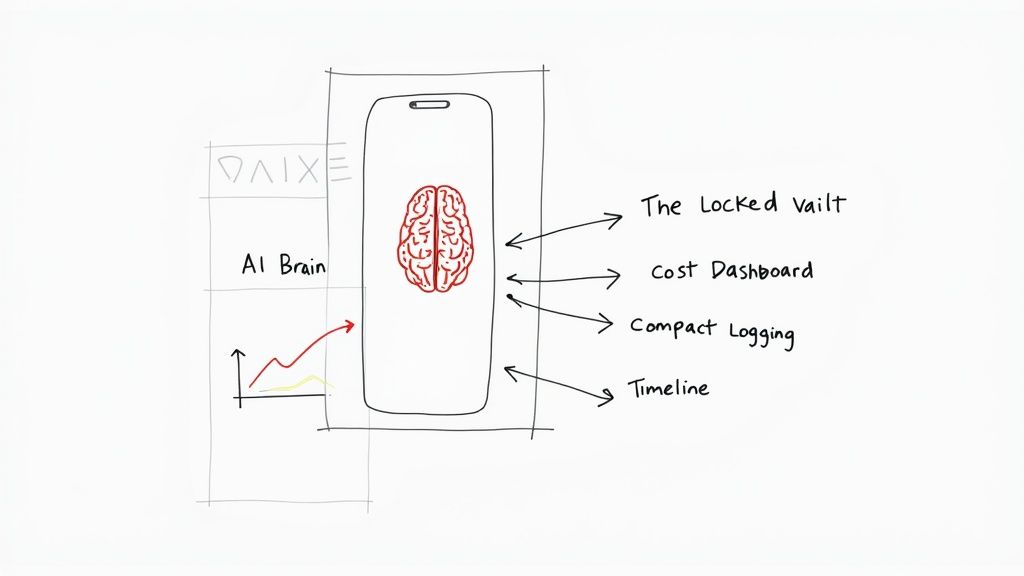
- A Prompt Vault: A secure, central library where you can store, manage, and track versions of all the prompts that guide your AI models. This is key to ensuring your app gives back consistent, accurate, and safe responses every single time.
- A Parameter Manager: A secure gateway that lets the AI access your internal databases for relevant information without ever putting sensitive patient data at risk. It’s the gatekeeper that keeps everything secure while still enabling personalization.
- A Logging System: A single dashboard to monitor every AI interaction across all your integrated models. This is absolutely critical for troubleshooting, fine-tuning performance, and keeping a clear audit trail for compliance.
- A Cost Manager: A dashboard that lets you see your cumulative spend across different AI services. This gives you a crystal-clear view of your budget and helps you avoid any nasty surprise bills.
By using a system like this, you can bring an application into the modern era, whether it's a brand-new build or a legacy platform you're looking to update. It’s the smart, scalable path to building for the future of medicine without the massive, time-sucking effort of reinventing the wheel.
Your Healthcare App Development Questions, Answered
Jumping into the world of healthcare app development always brings up a lot of questions. We get it. From timelines and budgets to specific tech capabilities, getting clear answers is the only way to move forward with confidence.
Let's walk through some of the most common queries we hear from founders and business leaders just like you.
How Long Does It Take to Develop a Healthcare App?
Honestly, the timeline for building a healthcare app depends entirely on its complexity. A focused Minimum Viable Product (MVP) with just the core, must-have features might take around 4-6 months to get right. That timeframe usually covers the initial discovery, UI/UX design, the actual development, and a whole lot of testing.
But if you're talking about a more complex platform—one with features like EMR/EHR integration, AI-powered diagnostics, and support for both iOS and Android—you're looking at a timeline closer to 9-12 months, maybe even more. Any good development partner will give you a realistic timeline broken down into clear phases, so you know exactly what’s happening and when.
What Are the Biggest Cost Drivers?
Several key factors really move the needle on the final cost of a medical app. The three biggest ones we see are:
- Feature Complexity: The fancy stuff costs more. Think real-time video consultations, custom AI algorithms, or integrations with third-party medical devices. These are resource-intensive and need specialized expertise, which directly hits the budget.
- Regulatory Compliance: Getting to full HIPAA compliance isn't just checking a box. It means building specialized security architecture, running rigorous audits, doing penetration testing, and creating detailed documentation. All of that adds to the overall cost.
- Third-Party Integrations: This is a big one. Connecting your app to outside systems like EMRs, pharmacy databases, or payment gateways is often a complex job that can add a surprising number of development hours.
And don't forget: budget for what comes after the launch. You'll have ongoing costs like server maintenance, crucial security updates, and regular feature enhancements to keep your app safe and relevant.
Can I Add AI Features to My Existing Healthcare App?
Absolutely. In fact, bolting AI onto an existing app is a fantastic way to boost its value and keep users engaged. The best part? It doesn't require a complete teardown and rebuild.
Modern tools, like a dedicated prompt management system, can act as a bridge. They allow you to plug sophisticated AI capabilities directly into your current software, which is almost always faster and more cost-effective than starting over.
By going this route, you can introduce smart features like an AI-powered patient assistant, predictive analytics for health trends, or automated data analysis to your user base without a ton of disruption.
Why Is User Experience So Critical?
In healthcare, a clunky user experience (UX) is more than just an annoyance—it can be a real barrier to care. A bad design can lead to worse patient outcomes, plain and simple. We know that around 80% of patients will just ditch an app if they find it hard to use.
Remember who's using your app. It could be seniors, patients who are under a lot of stress, or people with disabilities. An intuitive, accessible design makes sure everyone can easily find what they need and manage their health. At the end of the day, great UX builds trust, encourages people to stick to their treatment plans, and is a non-negotiable investment in your app’s success.
At Wonderment Apps, we live and breathe this stuff. We build secure, compliant, and user-first healthcare apps modernized with AI. Our own administrative toolkit, which includes a prompt vault, parameter manager, and cost controls, makes it surprisingly simple to integrate intelligent features into your product.
Ready to build a healthcare app that actually makes a difference? Schedule a demo with us today and see how our tools and team can bring your vision to life.